Dr Ashish Shrestha
An FPM Voices Q&A
Posted on: Friday 15 August 2025
Author: Dr Ashish Shrestha
This Q&A has been prepared by Dr Ashish Shrestha to celebrate South Asian Heritage Month.
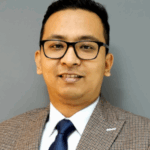
Ashish is a pharmaceutical physician currently working as the Global Lead for Clinical Trials at Bioluminux Clinical Research. He is particularly passionate about improving the representation of underserved populations in clinical trials and is a member of FPM's Equality, Diversity and Inclusion (EDI) Forum.

FPM Voices is a Q&A interview series that shines a spotlight on the careers and insights of senior and influential pharmaceutical physicians. Through these conversations, we aim to provide colleagues with a deeper understanding of the opportunities, challenges, and rewards of pharmaceutical medicine.
Each interview explores personal career journeys, key lessons learned, and the role that the Faculty of Pharmaceutical Medicine (FPM) has played in shaping professional growth.
What first sparked your interest in pharmaceutical medicine, and what has kept you passionate about the field?
My interest in pharmaceutical medicine was sparked during my early clinical career during my medical school studying Pharmacology when I saw first-hand how access to innovative medicines could transform patient outcomes. This interest multiplied by many folds when I saw the impact of COVID and was involved directly in patient care and ongoing works for a new vaccine. Working in diverse healthcare systems in Nepal, the Philippines, and Bangladesh highlighted the importance of well-designed clinical trials and equitable access to medicines. These experiences drove me to pursue a career where I could play at least a little role from where I am in shaping treatments that improve lives globally. What keeps me passionate is the dynamic nature of the field – continuous scientific advancements, the opportunity to contribute to drug development, and the ability to mentor the next generation of clinical researchers, especially doctors and health professionals from third world countries like Nepal, where I am originally from. All of these reinforce my commitment.
What does FPM represent to you, both professionally and personally?
FPM represents a professional body that brings together pharmaceutical physicians who are united by a shared vision for advancing patient care through medicines development, working together towards an evidence-based strategy to target public health needs. Professionally, it provides a framework for excellence, standards, and continuous professional development. Personally, FPM has given me a platform to engage with a community of like-minded colleagues and contribute to initiatives such as the EDI Forum, which resonates with my commitment to equity and inclusion in clinical research. This brings me great joy as I learn how modern medicine and the organisations involved in its development accept people like me and value representation throughout.
In what ways have you helped champion FPM’s mission for the next generation of pharmaceutical physicians?
I have actively supported the newer generation of pharmaceutical physicians and allied research staff by mentoring junior colleagues and research staff in clinical trials. At Bioluminux, I directly support training initiatives for new investigators and research teams, embedding FPM values around patient safety and ethical conduct and also maintain regular oversight of clinical trials being conducted at our research sites. This is in addition to my role as a clinical research physician, where I am directly involved in clinical trial conduct, maintaining efficient protocol compliance, GCP standards and GMC standards. As a PMST trainee myself and having completed an MSc in Pharmaceutical medicine, I practice what I preach and am open to feedback with reflective practice being the roots of how I shape myself. As a member of FPM’s EDI Forum since June 2025, I am committed to shaping initiatives that promote equity, diversity and inclusion, helping to build an environment where aspiring pharmaceutical physicians from all backgrounds can thrive. I am always exploring ways to achieve it more efficiently and hope to work together with brilliant members of the team to bring ideas to life.
What’s a recent innovation or lesson – whether from colleagues, patients, or scientific advancements – that has inspired or changed your perspective?
One lesson that has deeply inspired me is the increasing integration of real-world evidence (RWE) in clinical development, especially the increased awareness and focus on making trials more inclusive. I have seen how data from diverse patient populations can provide richer insights into how medicines perform outside controlled trial environments. This approach is helping bridge gaps in access and ensuring that clinical trials reflect real-world diversity, an area I am particularly passionate about.
Throughout your career, what has been your greatest challenge, and how do you stay resilient in the face of setbacks?
My greatest challenge, in a good way, has been transitioning between healthcare systems across multiple countries while maintaining career momentum. This required adaptability, ongoing learning, and resilience in the face of regulatory and cultural differences. I have stayed resilient by focusing on my long-term vision, leaning on mentorship, and maintaining a growth mindset.
How can the field of pharmaceutical medicine advance diversity and inclusion, and what actions can individuals take to contribute to meaningful change?
Diversity and inclusion can be advanced by ensuring that clinical trials include underrepresented populations, both in trial design and participant recruitment.
If you were a superhero, what would your superpower be?
I would love to have the power to give everyone the blessing of having a family that cares.
More from this series