
Setting Up For Success
FPM Annual Report for the year ending 31 December 2025
FPM in Numbers
Membership
1,589
Members
39
Countries Represented
115
New Members in 2025
15
Re-engaged Members
50
Membership Upgrades
Training and Education
87
DPM Training Programme Participants
88
Examination Candidates
86
Specialty Trainees
8
Trainees Who Completed PMST
Professional Standards
713
Doctors Connected to FPM Designated Body
87
Newly Connected Doctors
+2
New Appraisers
666
Appraisals Completed
Engagement
742
Event Attendees
70,189
Website Visitors
35.6%
Email Open Rate
1,178
New LinkedIn Followers
9,011 total followers
2025 at a glance
January |
MHRA clinical trials consultation formal response submitted |
February |
EDI Fellowship report published addressing women's under-representation |
March |
International Women's Day campaign EDI engagement drive |
May |
Inclusive Clinical Trials report published with Paddington Life Sciences |
June |
NICE pneumonia response Infectious Diseases Expert Group |
July |
Annual Awards Ceremony Merchant Taylors' Hall, 127 attendees BMJ letter published Patient Partnership Forum |
September |
Inaugural President's Lecture Dr David Jefferys FFPM, black-tie event Memcom Team of the Year Communications Team recognised |
October |
Start of office relocation to Holborn a new, modern London base Dr Arunesh Sil appointed new Specialty Training Lead |
November |
Annual Symposium 2025 Innovation in times of global uncertainty AGM: Articles of Association 93% voted in favour of reforms Association Excellence Gold Award Managing Respiratory Diseases e-learning programme |
December |
Inaugural Festive Gathering first year-end member social Prof Alan Boyd awarded MBE New Year Honour for past president |
Forewords
From the President and the Chief Executive

2025 was a vital year for FPM as we continued to develop our professional home to support the future of pharmaceutical medicine. Our specialty has changed enormously since FPM was established in 1989. A specialty that once focused primarily on medicines now spans a much wider landscape, encompassing vaccines, medical devices, diagnostics, precision therapies and digital health. At the same time, the world in which our members work has grown more complex: rapid scientific advances, organisational change, and shifting public expectations have all reshaped the context of pharmaceutical medicine. It is against this backdrop that FPM has taken deliberate steps to modernise to ensure we remain relevant, responsive, and equipped to serve our members and the patients and public they ultimately serve.
A significant milestone during the year was the approval by Members and Fellows of revised Articles of Association at the Annual General Meeting. These changes represent the outcome of an extensive governance review and mark an important step in modernising how FPM is governed.
The revised governance framework ensures that FPM remains aligned with contemporary best practice for professional membership organisations and charities. It also reflects a clearer distinction between the strategic and governance role of the Board of Trustees and the operational responsibilities of the executive team. Since FPM was established in 1989, both the specialty and the environment in which we operate have evolved considerably and it was pleasing that our members gave us an emphatic mandate to modernise.
During the year we also began developing FPM’s strategic plan for 2026–2028. This work was informed by engagement with members, volunteers and staff and looked at the future evolution not just of FPM but of pharmaceutical medicine as a whole. The strategy came into effect in January 2026 and we have already started seeing its impact, notably through the launch of the ambitious FPM Membership Project.
I would like to thank all those who contribute to the work of FPM – our members, volunteers, trustees and staff – for their continued commitment to advancing pharmaceutical medicine for the benefit of patients and the public.

Download our full annual report including accounts

Board of Trustees’ Report
The trustees are pleased to present their annual report for the financial year ended 31 December 2025.
Our Purpose
We advance the science and practice of pharmaceutical medicine by working to develop and maintain competence, ethics and integrity and the highest professional standards in the specialty for the benefit of the public.
Our Vision
A world where effective medicines meet the needs of patients.
Our Mission
To advance the science and practice of pharmaceutical medicine for the benefit of the public.
During the year ended 31 December 2025, we did this through three strategic pillars:
- Trust: FPM will be trustworthy by facilitating an increased understanding of the discovery, development and delivery of new medicines, vaccines and medical devices and the interface with public health.
- Sustainability: FPM will be sustainable by building an effective foundation to support our work.
- Relevance: FPM will be relevant to its membership and embrace the wider professional community in pharmaceutical medicine.
The Membership
FPM represents a diverse and international community of physicians who advance health through innovations in medicines, vaccines, medical devices, precision therapies, diagnostics, and digital health technologies.
Total membership (as at 31 December 2025): 1589 (+ 0.6% vs 2024)
Countries represented: 39
Approximately 80% of members are based in the UK, with the remainder located internationally.
FPM members contribute across many areas of the life sciences sector including pharmaceutical companies, regulatory agencies, academia, contract research organisations and healthcare systems.
Structure, Governance and Management
FPM is a charitable company limited by guarantee.
The organisation was founded in 1989 and registered as a charity in 1992. In 2009 it became a charitable company, transferring the assets and operations of the previous unincorporated charity.
FPM operates under a Memorandum and Articles of Association that define the organisation’s charitable objects and governance arrangements.
Voting members of the organisation include Fellows and Members of FPM.
The Board of Trustees
The Board of Trustees is responsible for the governance of FPM and for setting its overall strategic direction.
The Board ensures that FPM:
- operates in accordance with its charitable objectives
- complies with legal and regulatory requirements
- uses its resources effectively.
Trustees serve in a voluntary capacity and receive no remuneration.
The Board delegates the day-to-day management of FPM to the Chief Executive and staff team.
Governance Developments
During 2025, FPM began implementing reforms designed to strengthen governance and organisational resilience.
At the Annual General Meeting members approved revised Articles of Association which modernise the governance framework and align it with best practice in the charity sector.
These changes are described in greater detail later in the report.
Committees
The work of FPM is supported by several committees and working groups.
As of 31 December 2025 these comprised the following governance committees:
- Finance, Audit & Risk Committee (previously Finance Committee)
- Nominations Committee
- Remuneration Committee
Alongside these we had the following operational committees:
- Membership Committee
- Education and Standards Committee, and the Officers of the Board of Examiners
- Fellowship and Awards Committee
- Policy and Communications Group, and Expert Groups
- Trainees Committee
- FPM Global Forum
- Equality, Diversity and Inclusion Forum.
All these committees draw on the expertise of both trustees and volunteer members of FPM.
FPM’s Values
The work of FPM is guided by a set of core values.
| We Are: | This Means: |
|---|---|
| Professional | This means being accountable for our work and actions |
| Innovative | This means we seek solutions proactively |
| Caring | This means we treat everyone with dignity |
| Collaborative | This means we work positively with others |
| Credible | This means we are honest and ethical in our work |
| Learning | Investing in developing knowledge and skills |
Delivering on FPM’s Strategy
Strengthening FPM for the future
2025 was a year of significant organisational development for FPM. Several initiatives were undertaken to strengthen the organisation’s governance, operational capability and external engagement, helping ensure that FPM is well positioned to support the future of pharmaceutical medicine.
Governance and strategic development
A major milestone during the year was the approval by Members and Fellows of revised Articles of Association at the Annual General Meeting. A resounding 93% of votes received were in favour of the resolution. These changes modernise FPM’s governance framework and ensure that the organisation remains aligned with best practice for professional membership organisations and charities.
The revised arrangements support a clearer distinction between the strategic oversight responsibilities of the Board of Trustees and the operational delivery of the executive team. They also support a more strategically focused Board and strengthen trustee succession planning and development.
Alongside these governance developments, FPM developed its new strategy for 2026–2028, informed by engagement with members, volunteers and staff. This engagement included member surveys and two virtual town hall meetings, which provided opportunities for members to share their perspectives on the future of pharmaceutical medicine and the role of FPM in supporting the specialty. The strategy, as well as an operational plan for 2026 was approved by the board.
Building organisational capability
The organisation continued to modernise its digital infrastructure, including the introduction of new laptops and updated internal systems. These changes support more efficient ways of working and enable staff to deliver programmes and services more effectively. This work led to FPM achieving Cyber Essentials certification, demonstrating the organisation’s commitment to maintaining strong cybersecurity standards and protecting organisational and member data.
Investment was also made in staff capability through a new project management training initiative, with several members of staff completing professional training and qualifications through the Association for Project Management (APM). This programme strengthens the organisation’s ability to deliver complex projects effectively as FPM continues to expand its activities.
Office relocation
During the year FPM relocated its London office as part of a wider programme of organisational development.
The move reflects the evolving way in which the organisation operates, with flexible working arrangements and greater use of digital engagement with members and stakeholders.
The new office provides a more appropriate and cost-effective space that supports collaboration among staff and volunteers while contributing to the organisation’s long-term financial sustainability.
New leadership and professional oversight
Several key appointments were made during the year to support FPM’s professional and regulatory responsibilities.
Dr David Montgomery was appointed as Responsible Officer, supporting FPM’s role as a designated body for appraisal and revalidation.
Dr Arunesh Sil was appointed as Specialty Training Lead, taking on responsibility for ensuring the delivery of a high quality specialty training experience.
These appointments support the continued development of professional standards and training within the specialty.
Core Activities
In addition to the breadth of new initiatives we also remained focused on our core activities and initiatives aligned with FPM’s strategic plan for 2023–2025. The plan focused on three key pillars: Trust, Sustainability, and Relevance, and these guided the organisation’s activities across education, professional standards, member engagement and governance development.
| Pillar | Strategic objective | KPI | Action taken |
|---|---|---|---|
| Trust | Setting standards in the discipline through developing education and training programmes, courses and qualifications that build skills and knowledge across the spectrum of pharmaceutical medicine | Deliver programme of classroom training | Delivered ABPI Code in a Day (x3), Pharmaceutical Medicine in a Day, and Understanding Real World Evidence. DPM Training Programme reached 87 delegates at 112% of income target. |
| Trust | Advancing professional standards and qualifications | Maintain examination candidate numbers | Highest ever number of DPM candidates in 2025; plans announced for two CPM sittings from 2026 |
| Sustainability | Strengthen financial management | Modernise finance systems | New finance tools and processes implemented; office relocation completed to reduce costs |
| Sustainability | Invest in staff capability | Staff professional development | Project management training delivered; APM qualifications achieved by staff |
| Relevance | Grow membership | Increase member numbers | Membership grew to 1,589 across 39 countries (+0.6% vs 2024); 115 new members; 50 membership upgrades |
| Relevance | Strengthen member engagement | Deliver events programme | 742 event attendees; Annual Symposium, Annual Awards, inaugural President's Lecture, Festive Gathering delivered |
Education and Standards
Specialty training
Rejuvenation and strategic renewal were the defining themes for specialty training in 2025. Following a catch-up and recovery phase in 2024, this year represented the first full stable cycle in which the programme was able to operate at normal capacity. All outstanding backlogs from the previous year were successfully cleared in or by early 2025, allowing attention to shift away from remediation and towards a more modern and forward-looking approach to the delivery of PMST. These efforts laid an important framework that will enable future strategic planning and support the integration of the newly approved organisational-wide strategy into PMST in 2026.
The year also saw the successful revival of the Trainees Committee, restoring an important mechanism for trainee representation and engagement in the governance of specialty training. The re-established committee is expected to play a key role in ensuring that trainee perspectives continue to inform the ongoing development and delivery of PMST.
The year also brought important leadership changes. After more than two decades, Professor Peter Stonier stepped down from the role of Director of Specialty Training – the end of an era. In October, Dr Arunesh Sil was appointed as the new Specialty Training Lead with a remit to support and advise on shaping and delivering a refreshed vision for specialty training, aligned with evolving professional and educational needs and the wider organisational strategy. Professor Stonier continues to remain involved with specialty training in his new role as Chair of the Specialty Advisory Committee.
Together, these developments signal a transition from recovery to renewal, with the programme now well positioned to enter a new phase focused on alignment, innovation, sustainability, and continued growth.
Training
The DPM Training Programme had another busy year, with 87 delegates on the programme and final programme income exceeding budget target (reaching 112% of target). The programme is designed to prepare candidates for the Diploma in Pharmaceutical Medicine (DPM) examinations, and its success bodes well for our ability to bring people into FPM via training, through the exams and then into membership.
The programme also received positive feedback from delegates as part of the end of programme feedback survey, with the majority of respondents expressing a strong likelihood of recommending the training programme to a colleague or peer. Specifically, the programme received a Net Promoter Score (NPS) of +60. This indicates a high level of participant satisfaction and advocacy for the training programme. Annual constructive feedback from delegates and trainers alike helps us to continue to refine and focus future programme deliveries.
Our small portfolio of one-day training courses attracted healthy numbers. Our ever-popular ABPI Code in a Day course ran three times and was joined by Pharmaceutical Medicine in a Day, a ‘taster’ course for those interested in what pharmaceutical medicine has to offer, and Understanding and Interpreting Real World Evidence, which was delivered as a hybrid course this year at the Royal College of Paediatrics and Child Health.
Over the summer, a review of FPM’s training and educational offer was undertaken as part of the development of FPM’s Strategy 2026-2028. This included benchmarking against qualification and training provision from other Faculties and Colleges, as well as the aggregation and analysis of feedback from FPM members on the current learning offer. The findings from this work will help shape FPM’s future educational provision.
Educating others
The undergraduate Drug Discovery and Development programme, developed in collaboration with the ABPI and Brighton and Sussex Medical School (BSMS), and delivered at Kent and Medway Medical School (KMMS) and BSMS, entered its sixth year in 2025. The programme follows a spiral curriculum, comprising lecture-based teaching delivered to Year 1, Year 3, and Year 4/5 medical students by experts drawn from FPM’s membership.
Prescribing medicines is the most common patient-facing intervention in healthcare, and medical schools place strong emphasis on teaching safe and effective prescribing. Despite this, medical students typically receive little or no exposure to the role of the pharmaceutical industry in drug discovery and development, medicines regulation, pharmacovigilance, and the maintenance of high ethical standards in medical practice. The Drug Discovery and Development programme addresses this important gap in the undergraduate medical curriculum.
In summer 2025, a project was initiated to convert the programme into a suite of high-quality eLearning modules. The aim is to create a series that reflects the existing lecture content while supporting the ongoing education of medical students. This flexible approach to delivery will enable the programme to reach a wider range of medical schools and students, with potential to extend further into biomedical sciences programmes. In addition, it will help position FPM and ABPI as trusted sources of advice and support on medicines, while raising the profile of pharmaceutical medicine as a medical specialty.
The Physician and Scientist Induction Programme remained a key success in 2025, with the seventh and eighth sessions delivered for a US-based client, reflecting continued demand and engagement.
Examinations
In 2025, FPM announced plans to introduce two sittings of the Certificate in Pharmaceutical Medicine (CPM) examination per year from 2026, expanding opportunities for candidates and improving access to professional qualifications in pharmaceutical medicine. This represented a significant strategic development and required substantial preparatory work during the year. Officers of the Office of the Board of Examiners (OBoE) undertook an extensive review of the CPM question bank to ensure it remained robust, up to date and fit for purpose, while also beginning detailed planning for the first spring sitting of the Multiple Choice Question (MCQ) examination.
This development reflects the growing demand for education and training within the specialty and FPM’s continuing commitment to supporting professional development across the sector. While some roles within the OBoE remained vacant at the end of the year, work was underway to plan a targeted recruitment drive to strengthen the Board in advance of the introduction of multiple examination sittings. FPM remains grateful to all OBoE members for their professionalism, commitment and hard work in maintaining high standards during this period of development and change.
Candidate numbers for FPM examinations remained encouraging throughout 2025. Applications continued at a healthy level, reflecting sustained interest in FPM qualifications. Numbers for the Diploma in Pharmaceutical Medicine (DPM) examinations were robust, with 2025 seeing the highest number of candidates to date sitting across all DPM papers.
During the year, following an internal review and in light of feedback from employers and stakeholders, a decision was taken to formally discontinue FPM’s Human Pharmacology qualifications. The Certificate in Human Pharmacology (CHP), Diploma in Human Pharmacology (DHP) and Diploma in Experimental Therapeutics (DET), which had been suspended to new registrations for several months, were permanently closed to new applications. Arrangements remain in place to support existing candidates and to ensure that previously awarded qualifications continue to be fully recognised.
External Affairs
2025 was a year of significant policy activity for FPM. The Policy and Communications Group (PCG), supported by expert groups covering Clinical Trial Science and Regulations, Infectious Diseases, New Technologies, Oncology, and Rare Diseases, worked alongside the EDI Forum and the Patient Partnerships Forum to deliver an ambitious programme of external engagement. During the year, the Paediatrics and Women’s Health expert group and the UK and International Health Policy and Drug Safety expert group were stood down, reflecting an ongoing review of how FPM’s volunteer expertise is best deployed.
FPM’s external affairs function exists principally to ensure that members are well supported and engaged, while maintaining productive relationships with government, regulators, industry, academia, and the public. Against a backdrop of important legislative change and rapid technological development in the life sciences, FPM’s volunteer-led and staff-supported work sought to ensure the specialty’s voice was heard at the highest levels.
Consultation responses
FPM submitted five formal consultation responses in 2025. In January, FPM responded to the MHRA’s draft guidance on Clinical Trials for Medicines, the Rare Diseases Expert Group responded to NICE’s consultation on routing criteria for its Highly Specialised Technologies prioritisation board, and the Oncology Expert Group responded to the EMA’s scientific guideline on the clinical evaluation of therapeutic radiopharmaceuticals in oncology. In June, the Infectious Diseases Expert Group responded to NICE’s updated Quality Standard on Pneumonia: Diagnosis and Management. Later in the year, the PCG, EDI Forum, and expert groups collaborated on a joint response to the NHS call for evidence on its 10-year Workforce Plan.
Publications and position statements
In May, FPM published Advancing Clinical Trials: Making the UK a Global Leader in Inclusive Clinical Trials, in partnership with Paddington Life Sciences and with the support of Egality. The report arose from a roundtable held in November 2024 and set out recommendations for policymakers, funders, regulators, and industry on inclusive trial design, community engagement, and data collection. In July, a letter from FPM’s Working in Partnership with Patients and Communities Forum was published in the BMJ. In September, FPM published a position statement on post-market surveillance in response to misinformation circulating in the media. FPM also expressed formal support for the Academy of Medical Royal Colleges Academic Leads Committee position statement on clinical research in November.
Thought leadership and blogs
FPM’s blog programme covered environmental sustainability in medicines development, inclusive trial participation for World Clinical Trials Day, the crisis facing commercial clinical research and clinical academia, Black History Month, and patient and public involvement. The FPM Voices series continued throughout the year, profiling individual members and showcasing the breadth of career pathways in pharmaceutical medicine.
Digital Communications
2025 saw FPM’s communications function build on the foundations laid in previous years, with growing confidence and consistency in how the organisation presents itself across digital channels. The communications team was recognised for this progress in September, winning Memcom’s Team of the Year Award, a peer-judged accolade reflecting the quality and impact of the team’s work across editorial, digital, and strategic communications.
The LinkedIn Newsletter, launched in 2024 as a repurposed version of FPM’s monthly email bulletin, continued to grow as a tool for reaching and engaging a wider professional audience beyond the existing membership. The FPM Voices series matured into an established part of FPM’s content programme, with member profiles published consistently throughout the year. Drawing on the creative skills of FPM’s in-house communications staff, the team also produced video editions of FPM Voices, bringing the series to life in a new format and broadening its appeal to different audiences.
Advocate marketing grew significantly as a strand of activity in 2025, with members, partners, and speakers sharing and amplifying FPM content within their own networks. This was particularly evident around the Annual Awards, where member-led activity generated considerable reach and engagement across LinkedIn, creating a level of organic buzz that extended FPM’s visibility well beyond its usual audience.
Raising FPM’s global profile
Building on its commitment to expanding global collaboration, FPM continued to develop strategic partnerships and share expertise across key regions in 2025. FPM signed a Memorandum of Understanding with Renovare, an India-based training agency, supporting the development of pharmaceutical medicine capabilities internationally. A sub-committee was also established to explore training opportunities in South East Asia, based out of Singapore.
In October, the US-based Academy of Physicians in Clinical Research invited President Dr Sheuli Porkess to present on AI in clinical trials and to introduce FPM at their Annual Conference.
Equality, Diversity and Inclusion
FPM’s EDI Forum remained active throughout 2025, delivering a programme of content and engagement spanning observance moments, member profiling, and policy work.
A focus of the year was addressing the under-representation of women in Fellowship nominations: just 14% of applicants in 2024, despite women accounting for approximately 40% of FPM’s membership. A survey sponsored by Vice President Dr Emma Harvey, conducted in late 2024, gathered 47 responses on barriers and encouragement to apply. Its findings formed the basis of a report published in February 2025, followed by a dedicated engagement campaign coinciding with International Women’s Day in March. FPM was pleased to see women account for 33% of Fellowship applicants in 2025, an encouraging trend that we will continue to monitor.
In June, EDI Forum Chair Dr Bu Siakpere was in conversation with Dr Bryn Jones in a blog exploring the experiences of LGBTQ+ professionals in pharmaceutical medicine to mark Pride Month. October’s Black History Month was marked by a reflection from Dr Siakpere on progress and priorities in diversity and inclusion.
On the policy front, Chief Executive Dr Marcia Philbin attended the Catalysts for Change roundtable on diversity and inclusion in clinical trials in May, underlining FPM’s commitment to embedding EDI principles into drug development at a structural level. The women’s health Deep Dive session at the Annual Symposium in November also generated significant discussion, resulting in a follow-up workstream being established under the EDI Forum’s leadership.
Events
FPM continued to develop its programme of events in 2025, supporting professional engagement and knowledge exchange across the pharmaceutical medicine community.
FPM Annual Symposium 2025

Annual Awards Ceremony 2025
FPM President's Lecture 2025
FPM Annual Symposium 2025

FPM President's Lecture 2025
Annual Awards Ceremony 2025
FPM Annual Symposium 2025

FPM President's Lecture 2025

Annual Awards Ceremony 2025

Annual Awards Ceremony 2025
FPM Annual Symposium 2025
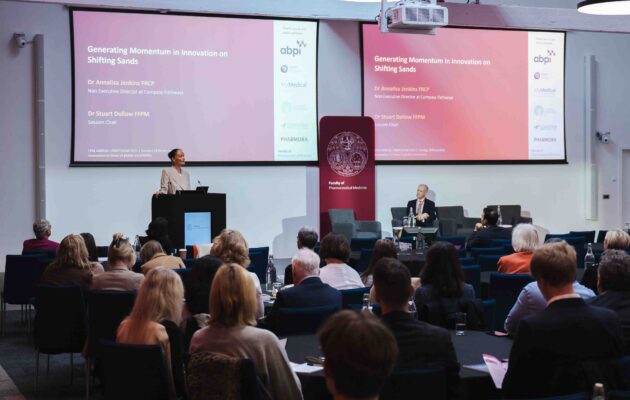
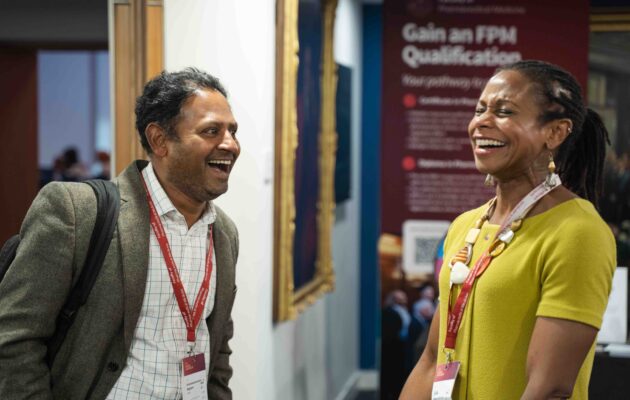
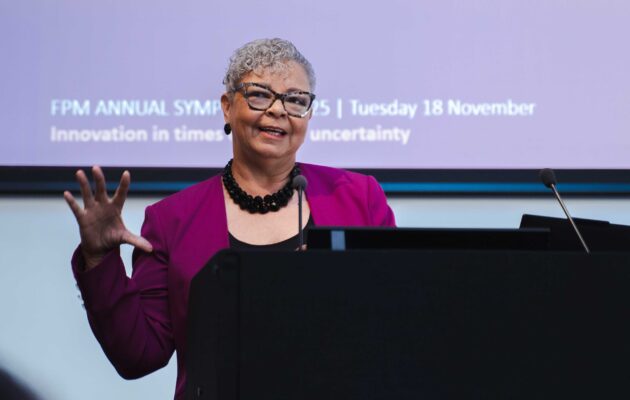
The Annual Symposium, held on 18 November at 10 Union Street in London, brought together leaders from across pharmaceutical medicine under the theme of Innovation in Times of Global Uncertainty. The opening plenary featured Dr Annalisa Jenkins and Dr Freda Lewis-Hall, reflecting on innovation in a changing global landscape and diversity and inclusion in pharmaceutical medicine respectively. Breakout Deep Dive sessions explored women’s health, communication and transparency in healthcare, new technologies, and research and development for an ageing population. The women’s health session was particularly impactful, resulting in a follow-up workstream being established under FPM’s EDI Forum. The closing plenary saw Professor Susan Hopkins draw on lessons from the pandemic to address pharmaceutical medicine’s role in health security. Alongside the scientific programme, the team delivered an enhanced delegate experience including a selfie wall, badge printing, and the newly introduced FPM Hub, a focal point for networking and engagement with FPM’s work across education, training and policy. The AGM followed the same evening.
The FPM Hub subsequently made its second appearance at DEMEC, a high-profile medical education conference, where FPM established an exhibition presence and engaged with a wider audience from across the life sciences sector.
Some of the feedback from delegates who attended the FPM Annual Symposium 2025
The 3 key note speakers were all excellent in conveying thought provoking, eloquent presentations on complex matters.
The deep dives were excellent especially the Women’s health one – excellent because the topic was really well covered in depth and there were actions agreed on to follow
up with FPM.
The Symposium was a really memorable and enriching experience. It offered a perfect balance of insightful presentations, thought-provoking discussions, and opportunities to connect with colleagues across the profession.
FPM Annual Awards 2025
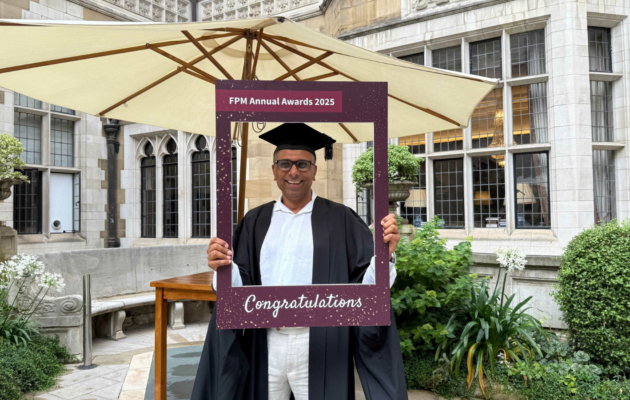
The Annual Awards Ceremony took place in July at Merchant Taylors’ Hall, London, with 127 attendees including 42 awardees. The ceremony introduced ceremonial gowns for recipients and secured sponsorship for the first time in several years.
Thirty-nine new Fellows and 31 new Members were admitted, Honorary Fellowships were bestowed on Professor Bobby Gaspar and Professor Saul Faust, and Honorary Membership was awarded to Dr Laragh de Bhulbh. Dr Vikesh Patel received both academic achievement awards, Dr Jo Collier received the Volunteer Award, and the President’s Medal was awarded to Professor Sam Salek in recognition of his longstanding contribution to the specialty.
The President’s Lecture and other events
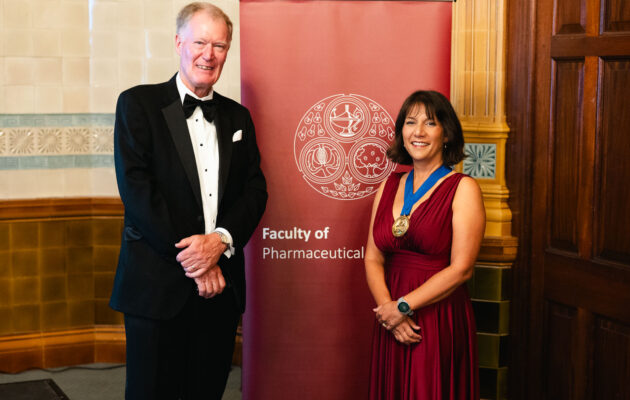
September saw the inaugural President’s Lecture, a significant new addition to FPM’s events calendar and one that was very warmly received. Delivered by Dr David Jefferys FFPM, the black-tie evening brought together senior figures from across clinical medicine, pharmaceutical medicine, and the life sciences in a prestigious historic London venue. Dr Jefferys gave a thought-provoking and engaging talk on the future direction of pharmaceutical medicine, and the event was well attended, establishing itself immediately as a highlight of the FPM calendar. It is anticipated that the President’s Lecture will become an annual fixture.
Other events during the year included two virtual Town Hall meetings with President Dr Sheuli Porkess, an FPM Journal Club hosted by Dr Amy Rogers, the Understanding the New Clinical Trials Legislation workshop, and two Lunch and Learn sessions in preparation for the ARCP. The year closed with the first Festive FPM Gathering, offering members and stakeholders an opportunity to connect informally.
Recognition and external awards
FPM’s work during the year received significant external recognition from across the membership and professional association sector.
The Managing Respiratory Diseases e-learning programme, developed by FPM and delivered through the NHS Learning Hub, received a Gold Award at the 2025 Association Excellence Awards, recognising the programme’s contribution to healthcare education.
FPM’s Communications Team also received national recognition, winning the Memcom Team of the Year Award. The award recognised the team’s work in strengthening FPM’s communications and raising the profile of pharmaceutical medicine across the life sciences sector.
At the close of the year, we were delighted by the news that Professor Alan Boyd, who served as FPM President from 2015-2018, was awarded an MBE in the UK’s New Year’s Honours for his outstanding contributions to gene therapy and pharmaceutical medicine education.
The FPM Designated Body
FPM is a Designated Body (DB) for providing annual appraisals and GMC revalidation. As of 31 December 2025, 713 members had a prescribed connection to FPM as a designated body, which is 45% of FPM members. This is the highest number of connected doctors since the introduction of revalidation at the end of 2012. In 2025, 987 doctors connected to the DB, which is 12% of the total number of connected doctors.
From the Responsible Officer
Dr David Montgomery FFPM

This has been a year of both transition and consolidation for FPM’s revalidation processes. Despite changes within the office team and the departure of long-standing colleagues, the commitment and professionalism of our appraisers and appraisal leads have ensured that high standards have been maintained. The continued growth in the number of connected doctors, alongside strong feedback from appraisees, reflects confidence in our systems and in the supportive ethos of our appraisal network.
The turnover within the team and leadership changes have inevitably brought challenges but have also provided the opportunity to refresh our processes and re-examine how we deliver our responsibilities most effectively. The Faculty remains focused on supporting doctors through the appraisal and revalidation process – particularly those newly connected or returning to practice – while maintaining the governance and quality standards expected of a designated body.
Looking ahead, the focus will be on embedding the new team, strengthening communication and consistency across the appraisal network, and ensuring our systems continue to evolve in step with regulatory expectations and the needs of our members. In particular, we will look to evolve both our use of technology and our approach to information flows through the team and the system to ensure greater oversight and less dependency on individual actions.
All that said, the dedication of our appraisers, the oversight of our appraisal leads, and the engagement of our connected doctors remain the foundation of our success in delivering a robust and supportive revalidation framework.
Future Plans
Looking ahead to 2027
As FPM enters the second year of its 2026–28 strategy, the focus will be on implementing the membership project, with membership growth and engagement as the primary goals. FPM plans to introduce new membership categories, enhance membership benefits, and provide greater career support to pharmaceutical physicians at all stages of their careers.
For the first time, FPM will hold two sittings of the Certificate and Diploma in Pharmaceutical Medicine examinations, providing greater flexibility for candidates committed to a career in pharmaceutical medicine and taking a step towards the prestigious postnominals MFPM.
FPM will continue to develop its collaborative relationships with external partners and stakeholders, building on joint activity with organisations including the Faculty of Public Health and the Association of British HealthTech Industries. Through these partnerships, FPM aims to bring the unique expertise of pharmaceutical physicians to bear on the most pressing challenges facing clinicians, policymakers, and the life sciences sector, delivering meaningful impact for patients and the NHS.
In addition, there will be a focus to replenish the free reserves by managing costs and through a concerted drive to maximise income growth. There will be push to increase membership numbers and to maximise opportunities for the commercial training programmes on offer.
Thank You
Finally, once again FPM would like to extend thanks to all our members who contributed to our activities in 2025, whether as committee members, examiners, specialty advisers, educational supervisors, appraisers or by supporting raising awareness and advocacy events and policy projects. We truly value your participation and support.
Download our full annual report including accounts