What is the Certificate in Pharmaceutical Medicine (CPM)?
The CPM, also known as Part 1 of the Diploma in Pharmaceutical Medicine, is a respected qualification that serves as a hallmark of excellence in the field of pharmaceutical medicine. It endorses the holder’s expertise and proficiency in pharmaceutical science, clinical research, and regulatory affairs.
Whether you’re a physician, scientist, pharmacist, or another healthcare professional, this examination offers a valuable opportunity to validate your knowledge and advance your career.

Not sure whether you should sit the CPM or DPM? Find out about the differences between these qualifications
Boost Your Spring 2027 Exams Success with Our Spring Saver Bundle
For the first time ever, from 2027, the DPM exams are being offered twice in one year, with a brand-new Spring exam diet joining the established Autumn sitting.
To mark this launch, we’re introducing our limited-time Spring Saver Bundle.
Book your Spring 2027 DPM exams together with the On-Demand Training Programme and benefit from a reduced package price.
One bundle. Your exams. Your preparation.
This bundle gives you:
- Access to the On-Demand Training Programme
- Flexibility to study at your own pace
- A reduced package price when training and exams are booked together
Important: this is an exclusive exam + training package. The Spring Saver Bundle can only be booked if you are also registering for at least one Spring 2027 DPM exam. This discounted training programme is not available on its own as part of this offer.
Eligibility Criteria
As of 2024, the CPM examination is available to physicians and non-physician candidates.
In addition to medically qualified candidates, the CPM examination is now accessible to individuals holding a bachelor’s degree in any scientific discipline or who have professional experience as a registered pharmacist, nurse, midwife, physiotherapist, osteopath, chiropractor, or psychologist.
It is strongly recommended you have at least two years’ experience of working in pharmaceutical medicine, and specifically in disciplines that provide experience relevant to the CPM syllabus, for example, clinical development, medical affairs, pharmacovigilance, or other related disciplines.
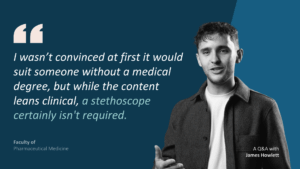
Read the full q&a blog: How I passed the Certificate in Pharmaceutical Medicine as a non-physician with James Howlett
How will the CPM benefit you?
Gaining a professional qualification in the specialty of pharmaceutical medicine can have a hugely beneficial impact on your career.
Gives you a globally recognised qualification
Formally recognises your knowledge and expertise of pharmaceutical medicine
Demonstrates your ongoing commitment to training and career development
Shows you're up for a challenge and will give you a sense of personal achievement
Gives you the edge when applying for a new job or promotion
Builds your professional reputation
Boosts your knowledge and expertise in pharmaceutical medicine
2027 Exams Schedule:
| Examination diet | Examination | Date | Time (UK time) | Duration | Booking window | Recommended Training Programme* |
|---|---|---|---|---|---|---|
| Spring 2027 | Multiple Choice Question (MCQ) paper, also known as Part 1 of the DPM | Monday 8 March 2027 | 12:30 | 2.5 hours (150 min) | 19 October 2026 - Monday 11 January 2027 | Spring Saver Bundle |
| Autumn 2027 | Multiple Choice Question (MCQ) paper, also known as Part 1 of the DPM | Monday 13 September 2027 | 10:30 | 2.5 hours (150 min) | TBC | Standard DPM Training Programme 2027 (open for bookings on 24 November) |
*Training programme participation is optional and is not mandatory to sit the DPM examinations.
The Spring Saver Bundle can be booked via our website. You have the option of booking just your exams or booking the Bundle.
The standard DPM Training Programme is delivered annually from February to October. If live instruction is not essential for you, we recommend the Spring Saver Bundle, which provides on-demand access only.
As part of the Spring Saver Bundle, you will receive access to the complete 2026 programme on demand, allowing you to study at your own pace. Your enrolment includes:
-
Recordings of all live teaching sessions
-
Presentation slides and supporting course materials
-
Downloadable learning resources
-
Knowledge quizzes
-
Mock examinations with marking and feedback available through the Learning Management System
Please note that only the programme portion of the Bundle is offered on demand. You will not attend live teaching sessions, and access to the training programme does not allow you to sit the DPM examinations at any time. You must take your examination(s) on the published Spring 2027 exam dates.
For full details of our examination withdrawal policy, please refer to the information below.
Registration and fees
Examination: Multiple Choice Question (MCQ) paper
Duration: 2.5 hours
Location: Online (See our online examinations FAQs)
CPM exam entry fee: £450
Withdrawal Policy: Candidates wishing to withdraw from an examination must email exams@fpm.org.uk.
- Full refund before the registration deadline.
- Refund less a £75 administrative fee per paper after the registration deadline and more than 14 days before the exam.
- No refund within 14 days of the exam, for non-attendance, or after starting an exam, except where approved under the Mitigating and Exceptional Circumstances Policy.
- Examination fees cannot be transferred to another sitting.
- Candidates who fail Part 1 will be automatically withdrawn from Part 2 and receive a full refund of the Part 2 fee.
Privacy Notice: If you are registered or anticipate being registered with the GMC, your personal data, including exam marks, will be passed to the GMC for quality assurance purposes and to facilitate the awarding of CCTs. Please note our privacy policy and terms and conditions.
If you are a physician in PMST or undergoing revalidation through an approved designated body, you should discuss the outcome of any exam at your next ARCP or revalidation appraisal respectively.
Examination Guidance and Regulations
A pass in the Certificate in Pharmaceutical Medicine (CPM) is also Part 1 of the Diploma in Pharmaceutical Medicine (DPM) but in order to take the Diploma examinations candidates do have to be medically qualified.CPM is a Multiple Choice Question paper (MCQ) of 75 questions, each with five possible answers, all to be completed in 2 hours 30 minutes;
Please see our reasonable adjustment policy (pdf) for candidates who may require additional time.

Could you pass the CPM?
Why not give these sample questions a try?
Preparing for the exams
Candidates are not required to have attended a postgraduate course covering the syllabus for pharmaceutical medicine although they may find it helpful.
There are several providers of training which candidates might find useful in the preparations for the examination. FPM runs the DPM Training Programme which covers the six topic areas relevant to the Certificate and Diploma in Pharmaceutical Medicine examinations and is delivered online via the FPM Learning Hub.
Study of a current edition of one of the published comprehensive texts is also highly recommended as preparation for the examination. Textbooks on key topics in the syllabus such as clinical trials, pharmacokinetics, medical statistics, safety assessments, etc, are also essential reading. Regulatory guidelines, particularly those issued by ICH, can also be a valuable source of up-to-date information.
Digital handbook
- Guidance and Regulations: CPM Candidates (469.18 KB)
- Syllabus: Certificate and Diploma in Pharmaceutical Medicine (read this along with the Guidance and Regulations for Candidates) (219.53 KB)
- Exam Specification: Certificate and Diploma in Pharmaceutical Medicine (747.76 KB)
- FPM Exam Protocols for Online Remote Invigilated Exams 2026 (391.84 KB)
- CPM/ Part 1 Diploma in Pharmaceutical Medicine Exam Sample Questions (1.39 MB)
- Reasonable Adjustment Policy (320.26 KB)
- Examination Appeal Policy (470.39 KB)
- Mitigating and Exceptional Circumstances Policy (191.02 KB)
- Misconduct Policy (170.34 KB)
- Withdrawal Policy (343.72 KB)