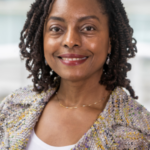
Dr Bu Siakpere FFPM
An FPM Voices Q&A
Posted on: Thursday 23 October 2025
Author: Dr Bu Siakpere FFPM
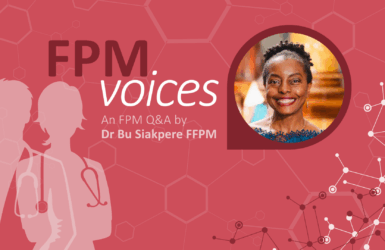
This Q&A has been prepared by Dr Bu Siakpere FFPM to celebrate Black History Month.
Dr Bu Siakpere is a Senior Global Medical Director at GSK and a Fellow of FPM with a Pharmaceutical Medicine specialisation. Bu has held GSK UK and global medical affairs roles of increasing seniority and started her pharmaceutical career at BMS after practising in the UK NHS. Bu also practised as a medical officer in rural South Africa and undertook a special assignment at Save the Children as the global pneumonia advisor.
Bu is also Chair of the FPM Equality, Diversity and Inclusion forum, Global co-lead of the GSK EMBRACE race and ethnicity employee resource group and a STEM Ambassador.

FPM Voices is a Q&A interview series that shines a spotlight on the careers and insights of senior and influential pharmaceutical physicians. Through these conversations, we aim to provide colleagues with a deeper understanding of the opportunities, challenges, and rewards of pharmaceutical medicine.
Each interview explores personal career journeys, key lessons learned, and the role that the Faculty of Pharmaceutical Medicine (FPM) has played in shaping professional growth.
What first sparked your interest in pharmaceutical medicine, and what has kept you passionate about the field?
I became interested in a career in pharmaceutical medicine after completing my MBA at Imperial College Business School, University of London. Potential employers highly valued the mix of clinical medical and business experience that I could offer but I felt that what they really needed was an experienced physician who understood research and development, the use of medicines and healthcare systems worldwide – someone who was a pharmaceutical physician.
Becoming a doctor was a vocational calling for me from childhood and I had a long-standing wish to make a positive impact on health on a global scale – particularly on women’s and maternal-child health. Joining the pharmaceutical industry initially as a medical advisor mainly in oncology and infectious diseases brought all of those aspirational elements together. My roles have been in medical affairs at the interface between research and development and the commercial part of the pharmaceutical industry. I love the fact that I have been able to continue learning in so many different ways as I have moved across different disease areas and medicines including oncology, dermatology and several other areas with pharmaceutical medicine’s core principles at the bedrock of my practice. This was strengthened by taking a residential postgraduate pharmaceutical medicine course over two years with the support of my managers to broaden and deepen my knowledge outside of my ‘pharmaceutical day-job’ and meet physicians from other companies.
I have remained passionate about pharmaceutical medicine due to the constantly evolving treatment landscape for so many conditions led mainly by pharmaceutical industry and academic innovations. I’m encouraged by the range of potential opportunities to contribute to improving human health with pharmaceutical medicine and other roles which could be local, regional or global in scope. I have also greatly enjoyed meeting and working with many colleagues who work across the wide range of roles in a pharmaceutical company, health services and academic bodies. I was also encouraged to continue practising clinical medicine at the outset of my pharma career in the UK NHS – which I did for 12 years. I am an active STEM ambassador in London schools and did a 6-month sabbatical at Save the Children. I appreciate my employers seeing the value in supporting this and understanding the ‘win-win’ for all concerned. I’ve also been able to create the time to support colleagues as a physician appraiser, employee representative, and employee resource group Global co-lead. I’m also active at the FPM as EDI Forum chair and with other activities – I’ll be chairing two different sessions at the 2025 Annual Symposium. The inter-play of these different aspects has been essential to keeping me motivated in my roles. I have been able to leverage insights and knowledge from this mix to improve what I can offer to pharmaceutical medicine which keeps me enthused about continuing my career in the pharmaceutical industry.
What does FPM represent to you, both professionally and personally?
I regard the FPM as the ‘home’ of pharmaceutical medicine and its mission “to advance the science and practice of pharmaceutical medicine by working to develop and maintain competence, ethics and integrity and the highest professional standards in the specialty for the benefit of the public” is one that is clear and relatable. It is an academic body of which I am proud to be a Fellow and an institution that I consider as a platform and voice for pharmaceutical physicians. I see it being an essential bridge to other medical academic colleges, the pharmaceutical community, and wider society.
In what ways have you helped champion FPM’s mission for the next generation of pharmaceutical physicians?
Since being awarded my CCST (Certificate of Completion of Specialist Training) in Pharmaceutical Medicine, I have been a GMC pharmaceutical physician appraiser to many physicians. As a Fellow I have been involved with the FPM in the Equity, Diversity and Inclusion (EDI) Forum for several years and I became EDI Forum Chair at the end of 2024. I have authored several FPM features and been part of three FPM Annual Symposia as a speaker or as part of the organising committee. I have engaged the youngest members of our society as a STEM ambassador – talking to children as young as three about health and illness, medicines, and the pharmaceutical industry to ignite a passion about science, healthcare, care of themselves and others, whilst also highlighting potential career interests which could include pharmaceutical medicine.
What’s a recent innovation or lesson – whether from colleagues, patients, or scientific advancements – that has inspired or changed your perspective?
I am continually amazed at the advances being made to treat previously ‘untreatable’ conditions through advances involving multi-disciplinary collaboration. The first child born in the UK in 2025 from a woman who was born without a viable uterus and had a womb transplant is a heart-warming example of remarkable vision, hope, collaboration, trust, determination, and medical excellence. Other innovations in ophthalmology, neurology, and many other areas are also inspirational and uplifting.
What is one key change or advancement you hope to see in pharmaceutical medicine in the coming years, and why?
I would like to see personalised preventative medicine being the norm for everyone, anywhere, at any time. You can purchase a plethora of home testing kits to self-diagnose, the range of over-the-counter medicines has expanded and become more available and the internet has increased the range of healthcare professionals who can be accessed. I would like to see pharmaceutical medicine play a greater part in the self-empowerment of people to keep themselves, loved ones, and society healthy.
What is one of the biggest misconceptions about pharmaceutical medicine, and how do you think we can change that perception?
There is a misconception that pharmaceutical medicine is not about patients when it fundamentally is! Health care professionals and patients use medicines which they would expect to have been developed, researched, tested and monitored to the highest standards by pharmaceutical physicians and other professionals. I had little idea about pharmaceutical medicine until I started seriously exploring potential roles post-MBA. The education of fellow medical professionals, medical and other healthcare students is key to illuminate what pharmaceutical medicine is and the strides that can be made through effective understanding and collaboration across the healthcare eco-system. Engagement with the public and patients is also critical – it is a challenge to make our voices heard in the era of social media but we must make time to ensure that our expertise has an avenue for effective dissemination to reach the audiences where this information is needed most.
How can the field of pharmaceutical medicine advance diversity and inclusion, and what actions can individuals take to contribute to meaningful change?
I believe that awareness is key to advancing equity, diversity and inclusion in pharmaceutical medicine. Most of us are time-poor and pausing to reflect on what we see or hear in the EDI space is not a luxury – it’s essential. The pharmaceutical medicine community has the power to make a significant impact on millions of people through the decisions that we make almost every day, and we have an incomparable network of colleagues and stakeholders who can amplify our decisions – this can work positively and negatively for those dependent on our medicines, vaccines and devices.
If you weren’t a doctor, what completely different career would you want to try?
I would like to be a sustainable hotel complex designer, creating beautiful outdoor – indoor environments in harmony with their surroundings for rest, relaxation and enjoyment for all generations!
More from this series