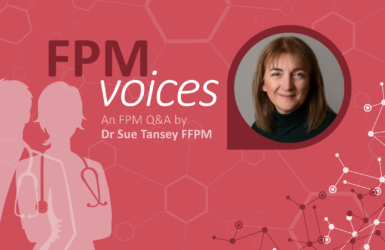
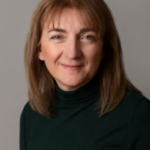
Dr Susan Tansey FFPM
An FPM Voices Q&A
Posted on: Wednesday 4 March 2026
Author: Dr Susan Tansey
This Q&A has been prepared by Dr Susan Tansey FFPM in celebration of International Women's Day 2026 (8 March).
Susan graduated with a BSc in Medical Science from St Andrews University followed by MBChB from Manchester University and is currently an Independent Consultant Pharmaceutical Physician. She trained for several years in paediatrics and neonatology in the NHS but having an interest in clinical research she joined the pharmaceutical industry in 1998. Susan has since been involved in the clinical development of new medicines and vaccines in several therapeutic areas with a focus on rare diseases and paediatrics. She has held positions of increasing responsibility including Vice President of Therapeutic Strategy at IQVIA. Susan has worked in both pharmaceutical companies and contract research organisations and held the position of Associate Director for Industry at the UK’s Medicines for Children Network from 2011 to 2015.
Susan also has an interest in bioethics and having been on the Nuffield Council of Bioethics’ Working Group on Children and Clinical Research between 2013 to 2015 was appointed as a Council member in 2020. She recently completed an MA in Medical Ethics and Law at King’s College graduating with a merit.

FPM Voices is a Q&A interview series that shines a spotlight on the careers and insights of senior and influential pharmaceutical physicians. Through these conversations, we aim to provide colleagues with a deeper understanding of the opportunities, challenges, and rewards of pharmaceutical medicine.
Each interview explores personal career journeys, key lessons learned, and the role that the Faculty of Pharmaceutical Medicine (FPM) has played in shaping professional growth.
What first sparked your interest in pharmaceutical medicine, and what has kept you passionate about the field?
I got interested in clinical trials during my clinical training in paediatrics and particularly when I was a research fellow for a global perinatal clinical trial. Unfortunately, that trial closed prematurely but I learned about setting up and conducting global trials. I found the process very interesting, particularly the discussions between the Data Safety Monitoring Committee and Steering Committee, which resulted in the decision to halt the trial prematurely.
Subsequently I decided to apply for a clinical development role in industry. Since then, I have been particularly encouraged by the successes in medicines developed to treat cystic fibrosis as I spent much of my time in the NHS looking after children severely affected by this condition. Although there have not been many advances yet in the development of medicines for premature neonates, I am hopeful that they will come and am excited to see some of the medicines and devices currently in development in neonatology to treat and prevent the complications of prematurity.
What does FPM represent to you, both professionally and personally?
When I first joined FPM, it provided me with a pathway to develop my skills and knowledge in pharmaceutical medicine through studying for and sitting the Diploma in Pharmaceutical Medicine (DPM). At the same time, I developed a network of fellow trainee pharmaceutical physicians, some working in different roles. I am still in contact with many of those I met over 20 years ago today as part of my informal personal network of colleagues. I also make a point of trying to attend the annual symposium as a way of maintaining my network while keeping up to date in pharmaceutical medicine.
In what ways have you helped champion FPM’s mission for the next generation of pharmaceutical physicians?
I have found it very rewarding getting involved with FPM projects. Since 2019 I have been involved with FPM and the ABPI (Association of the British Pharmaceutical Industry) undergraduate pharmaceutical medicine curriculum, both lecturing on clinical trials and helping to coordinate the programme. We are now working on digitising the lectures so more medical schools can potentially benefit from the programme. I also lecture to trainee pharmaceutical physicians on the DPM Training Programme on clinical development and ethics and have helped lead the Pharmaceutical Medicine in a Day course. I particularly enjoy meeting trainee pharmaceutical physicians on these courses and leading discussions and workshop sessions.
What’s a recent innovation or lesson – whether from colleagues, patients, or scientific advancements – that has inspired or changed your perspective?
A recent paper: The Lancet Child and Adolescent Health Commission on the future of neonatology has called for all stakeholders to unite and urgently consider how to address the stalling of innovation in neonatal medicine. The authors highlight an urgent need to review regulatory pathways to ensure there is a balance between precaution and innovation, enabling clinical research into potential interventions aiming to treat the complications of prematurity. They also highlight the lack of interest from industry in this area and propose establishment of a global alliance for improved neonatal health and set out recommendations for all stakeholder groups. Having trained in neonatology and maintaining a strong interest in perinatal clinical trials, I await with interest to see if their aims can be achieved. I would be delighted to see an increase in neonatal research leading to effective interventions to reduce neonatal mortality and morbidity.
How has mentorship shaped your career, and how do you support and guide those entering pharmaceutical medicine?
I have been lucky enough to have had several great mentors during my career, some of whom were my managers, and at least two people who I met through FPM. The latter were Professor Alan Boyd, (former President of FPM) who I recall meeting and chatting with on a bus after an FPM event at the Royal College of Paediatrics and Child Health (RCPCH) many years ago! Alan continues to be a great support and adviser to me in all aspects of pharmaceutical medicine and was particularly helpful when I set up as an independent consultant. Similarly, Dr Brian Gennery (also a former President of FPM) taught me on a DPM course at the start of my career and later was my specialty adviser when I did Higher Medical Training. He was very supportive and encouraging and succeeded him as the FPM observer on the RCPCH/Neonatal and Paediatric Pharmacists Group Committee on Medicines.
I think that mentorship is extremely important and I have informally mentored several physicians in clinical practice who went on to work in the pharmaceutical industry – mostly paediatricians due to my background! It is great to see them enjoying their jobs and progressing. I think that industry placements are extremely helpful and have helped set up these both for a medical student, and for paediatricians. One of the doctors who took up a placement now has an interesting hybrid role working both in industry and part-time in the NHS as a paediatric pharmacologist. I think that having a mentor is helpful for getting careers advice and help navigating the different roles in industry from someone who has been there and done it!
What is one of the biggest misconceptions about pharmaceutical medicine, and how do you think we can change that perception?
I think there is often a perception that pharmaceutical medicine is all about making money. Although we must accept that we work in businesses that are driven by financial targets, I think it is important to make clear that pharmaceutical physicians in whatever role are aiming to prioritise patients and their care, even though in our case we aren’t directly involved in patient care. I think that we should try to improve the perception of pharmaceutical physicians by listening to those who have concerns about issues such as conflicts of interest and overmedicalisation and collaborating to find better ways to work together.
If you weren’t a doctor, what completely different career would you want to try?
I recently completed an MA in Medical Ethics and Law and found medical law to be an extremely interesting subject. I think I would have enjoyed working in some aspect of medical law as an academic or barrister, or possibly even as a coroner as I enjoyed pathology at medical school.
More from this series