Ramadan Reflections by Dr Ziyad Azam
Posted on: Tuesday 17 February 2026

With the month of Ramadan just around the corner, it’s a great opportunity to highlight its significance for billions of people all around the world. In this blog, I’ll be sharing some insights into what a typical day looks like as well as how to support colleagues and patients who may be observing Ramadan this year.
As the Islamic calendar is lunar based, the month starts at a different time each year in the Gregorian calendar. Ramadan this year is expected to start on the evening of Tuesday 17 February 2026.
So, what is Ramadan?
It is the ninth month of the Islamic calendar where Muslims fast from dawn until dusk, abstaining from food, drink, smoking, and other physical needs during the daylight hours. It is also the month in which the Qur’an was first revealed to the Prophet Muhammad (peace by upon him).
The restriction of appetite forms only a small part of Ramadan – heavier emphasis is placed on strengthening our connection to God and communities, often through reflection and gratitude. Social media and television, amongst other distractions, often take a back seat as Muslims focus on family time, community ties, and personal development.
What does a typical day look like in Ramadan?
05:00 – wake up for the pre-dawn meal called suhoor or sehri. For myself, it’s hydration and porridge with honey, occasionally alongside eggs. It’s important to keep this nutritious to stay satiated throughout the day!
05:30 – start of the fast and first prayer of the day, then back to sleep
08:00 – working day begins, just no morning coffee sadly
13:00 – second prayer of the day during “lunch” break, minus the lunch of course!
16:00 – third prayer of the day
17:00 – work day ends
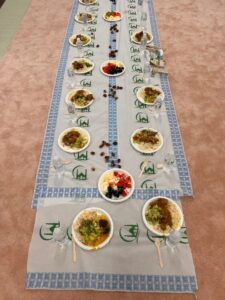
17:30 – fast is opened with dates and water traditionally, followed by the evening prayer and then dinner. Food varies but generally avoiding fried food is my theme
19:00 – final prayer of the day and start of the optional nightly congregational prayer, called taraweeh. It’s a much longer prayer in the mosque so I join the congregation there when possible. Otherwise, at home, it takes less time so it’s a good opportunity for reading/studying the Qur’an and evening exercise (wishful thinking maybe?!)
21:00 – congregational prayers end in the mosque. I typically avoid TV/movies and cut down on social media during this month to give Ramadan the importance it deserves, which is harder than you think!
22:00 – try for an early night as the disturbed sleep is often the biggest challenge in Ramadan surprisingly!
How can you support your colleagues and patients during Ramadan?
- Be mindful that not all Muslims are fasting! There are lots of exemptions, from pregnancy to ill health to travel. Religious practice is personal, so allow individuals to share as much as they feel comfortable without judgement.
- Encourage open dialogue. Discuss with colleagues and patients what they would like – it might be a more flexible working pattern or a modified dosing schedule. For example, some medications can be safely rescheduled during fasting following appropriate clinical guidance.
- Reinforce safety with empathy; some patients may feel strongly about fasting even when it may not be medically advisable, so it’s important to discuss any potential safety risks with compassion.
- Remember that Ramadan is much more than just fasting! Often, focus is placed on the physical rituals rather than the deeper meaning behind such religious activities.
- It’s good to be curious. You might have questions so please ask away in a respectful manner.
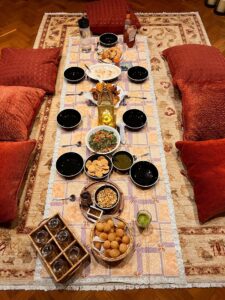
Ramadan invites all of us, even those that do not observe it, to focus on reflection, compassion, gratitude, and community. As medical professionals, these values are often at the core of our profession and practice. By supporting our colleagues and patients during Ramdan and beyond, we can strengthen our patient-centric care and create an even more inclusive and empathetic community.
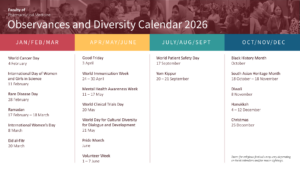
Ramadan is one of the many significant moments highlighted in our 2026 Observances and Diversity Calendar, thoughtfully developed by our Equality, Diversity and Inclusion (EDI) Forum to celebrate the rich diversity within our membership.