In Conversation: The value of multiple hats worn by people involved in clinical trials
Posted on: Wednesday 20 May 2026
This year, Clinical Trials Day focuses on the people involved in the design and delivery of clinical trials. As FPM’s Patient Partnership Forum, we want to shed light on the variety of roles people involved in clinical trials can have. We often describe this as wearing different hats, bringing together different skills, insights and expertise depending on which hat we are wearing.
What are the ‘hats’ that you wear?
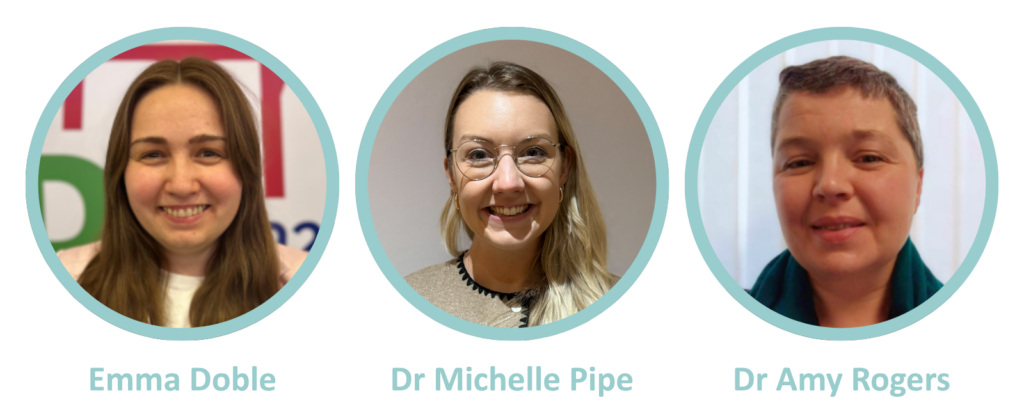
Emma: The first of my hats I have been wearing since I was 4 years old after I was diagnosed with Type 1 Diabetes. Today as a patient advocate, I have extensive experience of being a patient with a long-term condition myself but am also connected with many other patients through peer support communities. My other hat is that of Patient and Public Strategy editor at the BMJ, where I manage patient and public partnership across the BMJ journals.
Michelle: I’m currently a research physician at Protas, a non-profit organisation dedicated to developing better treatments through smarter clinical trials. I’ve worked in research full time since 2023 and love how dynamic and constantly evolving the field is, there’s always something new to learn. Contributing to developing treatments that can improve public health gives my work a real sense of purpose. I’ve also taken part in two clinical trials myself: one decentralised study investigating population-level immunity and another as part of Our Future Health. I believe all researchers should experience taking part in a trial to truly understand the participant perspective.
Amy: Like Michelle, I am a physician working in clinical trials. I started in medicine as a GP, but I’ve worked in academic clinical research for over 10 years now. In that role, I am a scientist, a doctor, a teacher, a writer, and a communicator. One of my favourite parts of my job is involving patients and the public in clinical research and supporting other researchers to do the same. Over the years, I’ve also spent time on the other side of the fence, taking part in several research studies, including one of the COVID-19 vaccine trials.
What do you bring to clinical trials?
Emma: As a patient I bring the lived experience insights to clinical trials including whether the trials are focused on things that matter to patients, whether they are accessible and achievable for patients to take part in and ensure that the results are available for the patients and communities they most impact. As an editor, I review whether the trials are relevant and impactful to the patients they will impact. I also support patient partnership in the review process including encouraging and supporting patient co-authors in clinical research and trials.
Michelle: I always try to keep participants at the heart of what we do. A trial’s success depends not just on its methodology but on how participants feel throughout their involvement. People give their time and trust to research, and it’s our responsibility to ensure their experience is positive and meaningful. My clinical background informs this mindset and helps me balance the human and the scientific sides. I also sit on a research ethics committee, which gives me another lens on trial design and conduct. That role allows me to support good-quality research while applying what I learn directly to my day-to-day work.
Amy: Like most doctors, I am deeply curious about medical science, but also about how it fits into our lives. In keeping with my background as a GP, I take a holistic view of people’s health and wider lives, and I bring that perspective to designing and running clinical trials. I am always trying to put myself in the shoes of the patient or research participant and thinking about how they will experience what we are planning. My interest in patient and public involvement comes from that desire to understand people’s experiences better and use them to improve research.
How have your experiences shaped your passion for Patient and Public Involvement and Engagement (PPIE)?
Emma: Living with a chronic condition has allowed me to see how I could turn something negative in my life into something I could see making a difference to other people. My role with the BMJ has allowed me to take my lived experience and turn it into supporting others to share their experiences with the aim of making healthcare better.
Michelle: Having worn both the clinician’s and participant’s hats, I know how vital PPIE is to building trust and shaping better research. The more people understand and feel involved in trials, the stronger our evidence and impact become. My experience reinforces the idea that research works best when it listens – when we design alongside those who take part, not just for them.
Amy: When I first started in research, I was surprised to find that we did not routinely ask people what they thought of our research plans or invite them to help us. It seemed madness not to take opportunities to learn from the real experts in patient experience. As a relative outsider in research at that time, but with the training and experience of a GP, I was in a position to help change that. I have been a champion for involvement ever since those first tentative conversations with the wonderful strangers in the hospital concourse who stopped to talk to me about getting involved in research.
What is your hope for the future?
Emma: I would like to see every clinical trial involving patients and communities throughout the development and conduct of the study. That patients will have a meaningful place on the clinical trial team and will have their input valued in decision making. I would also like to see an increase of patient co-authors in publications from clinical trials signalling the importance of their role.
Michelle: I hope to see trials that recruit truly diverse populations, treat their participants exceptionally well, and deliver clear, actionable answers to important scientific questions – and then share those results widely.
Amy: The research community has made great strides in involvement over the last decade. But there is still resistance in some quarters to the idea that it is worth expending limited resources on something often perceived as time-consuming and hard to measure. I hope that, as more of us learn how rewarding and useful PPIE is, we will stop asking how much it is costing and instead question how much research without PPIE might be wasting.
When celebrating Clinical Trials Day, it is key to reflect on the importance of the people at the heart of clinical trials – the people who design them, make them happen, and are most affected by them. Often these individuals bring a variety of skills, knowledge and experience through their various hats. It is important to recognise and celebrate these in the drive to lift research forward.