
Professor Tim Higenbottam awarded FPM President’s Medal 2026
Posted on: Tuesday 30 June 2026
Author: FPM
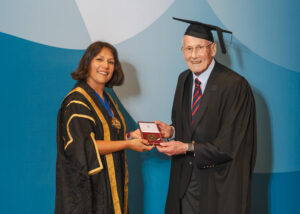
Professor Tim Higenbottam has been awarded the prestigious FPM President’s Medal at the 2026 FPM Annual Awards Ceremony.
The FPM President’s Medal is the highest honour FPM can bestow and recognises exceptional individuals who have gone above and beyond to deliver fundamental and transformational change to the field of pharmaceutical medicine. Typically, just one medal is awarded each year and Professor Tim Higenbottam succeeds Professor Sam Salek (2025), Dr David Jefferys (2024) and Dr Ruth Dixon (2023) in receiving this honour.
The awarding process is a rigorous one and starts with an invitation to all FPM members to submit nominations. The Fellowship and Awards Committee judges each nomination on its individual merit and a final decision is agreed by a vote. The nominated awardee is presented to the Board for final approval.
The winner receives a physical medal and is invited to our Annual Awards Ceremony where a citation is read by their nominator and they receive formal commendation of their achievements amongst their peers.
A career shaped by collaboration
Receiving the President’s Medal, Tim reflected on the many colleagues who have shaped his career through their encouragement, teaching, and support.
About Professor Tim Higenbottam
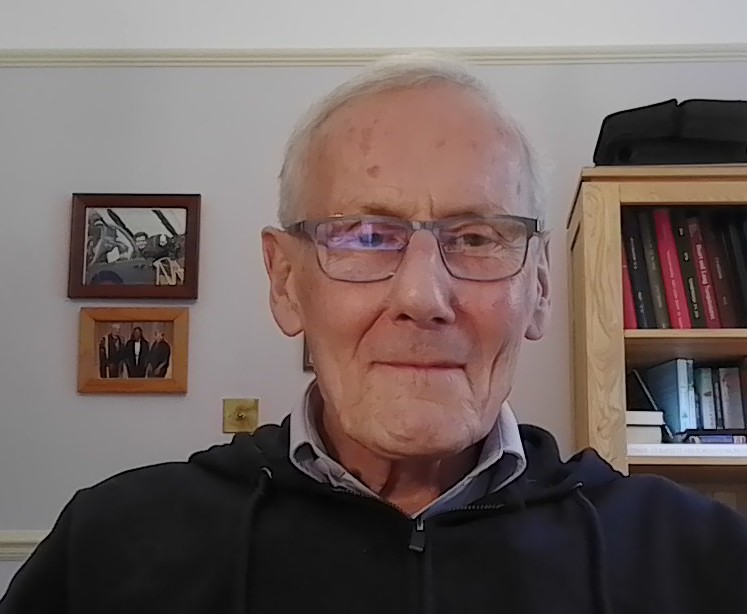
While training at Guy’s Hospital in 1967, Tim was encouraged by Professor Tim Clark and Dr Paul Forgacs (the father of lung sounds) to study lung physiology. They led him to study the larynx (think about the lung fish!). This work resulted in building a myograph that aided in the diagnosis of Shy-Drager syndrome. It also uncovered how smokers learn to inhale tobacco smoke and identified the first muscle that initiates inhalation: the posterior-cricoarytenoid muscle.
When Tim arrived at Papworth Hospital in 1981, he joined Professor John Wallwork in setting up lung transplantation. This led to the development of transbronchial lung biopsy to diagnose rejection and infection. Shortages of donors also led to the discovery of two medical pathways for treating idiopathic Pulmonary Arterial Hypertension (iPAH): the nitric oxide and the Prostacyclin pathway. These led to the first medicines shown to extend survival in patients with the condition.
In Sheffield in 1999, a new iPAH clinic was established by the Royal Hallamshire Hospital. This was followed by the National UK iPAH clinics that were set up with colleagues in Glasgow, Newcastle, Hammersmith and Royal Free Hospitals, with support from Lord Philip Hunt, then Parliamentary Under‑Secretary of State at the Department of Health. Lord Hunt negotiated a significant reduction in the cost of prostacyclin.
In 2001, Dr Mike Hardman of AstraZeneca encouraged Tim to join FPM and proposed him for Fellowship. He joined two Innovative Medicines Initative boards and guided Tim to join two himself, U-BIOPRED and PROactive. Both attracted substantive investment from the European Union and industry. U-BIOPRED enabled stratified (precision) medicine that delivered new therapies for severe asthma and COPD. PROactive introduced an early patient reported outcome measure for COPD.
As President of FPM from 2005-2009, Dr Susan Bews encouraged Tim to chair the organisation’s Professional Standards Committee, a role he held until 2015. During this time, Tim was working in Italy in Chiesi Farmaceutici. In 2008, Paolo Chiesi taught him pharmacology that led to the first triple therapy inhaler for COPD & Asthma, Trimbow.
Dr Alan Boyd encouraged Tim to put himself forward for President of FPM in 2018. The timing was very important, as it enabled the recruitment of Marcia Philbin as FPM’s Chief Executive. Marcia led the digital transformation of the organisation’s communications during the COVID-19 pandemic.
Tim is the founder of Camcon Robotics Ltd. He has also been supported by Allen Mornington-West (Electrical Engineer), Graham Wallace (Computer Engineer), Kirsteen Donaldson FFPM, Tunde Otulana MD, Eric Demoncheaux (Chemist), Patrick Keohane (Founder of Chrysea Ltd), Peter Feldschreiber (Lawyer), and Rod Lane (Founder of Zelemiq).
Citation given by nominator Dr Sheuli Porkess
FPM Past President Professor Tim Higenbottam has made major contributions to the understanding and treatment of respiratory diseases. He has published more than 400 peer-reviewed papers, supervised 21 PhD, MSc and MD students, and authored two books. He is a Fellow of the Royal College of Physicians of London, a Fellow of the American College of Chest Physicians and a member of numerous international scientific societies.
Professor Higenbottam began his career at Guy’s Hospital Medical School. He went on to discover intravenous prostacyclin, the first therapy shown to improve survival in idiopathic pulmonary arterial hypertension, and also inhaled nitric oxide as a future treatment for neonatal pulmonary hypertension whilst at Papworth and Addenbrooke’s Hospitals. At AstraZeneca he worked on disease modification through immune modulation, then at Chiesi, he began development of the first triple inhaler for COPD.
As President of FPM from 2018 and 2021, Professor Higenbottam steered our speciality through COVID-19, which was an exceptionally challenging time with the pandemic putting pharmaceutical medicine into the public consciousness like never before. During his presidency, he also established the Medical Devices Expert Group, now the New Technologies Expert Group, which was a really important forward-looking step for FPM.
Beyond this impressive list of achievements, those of us who have worked with Tim will know him for his generosity, curiosity and enthusiasm for advancing respiratory medicine.
Fellows, Members, Guests – in recognition of his many contributions to pharmaceutical-medicine, and his significant leadership contributions to FPM, I am delighted to present Professor Tim Higenbottam as a most worthy recipient of the President’s Medal.