My DPM Experience: How I turned revision into real-world impact
Posted on: Thursday 6 August 2026
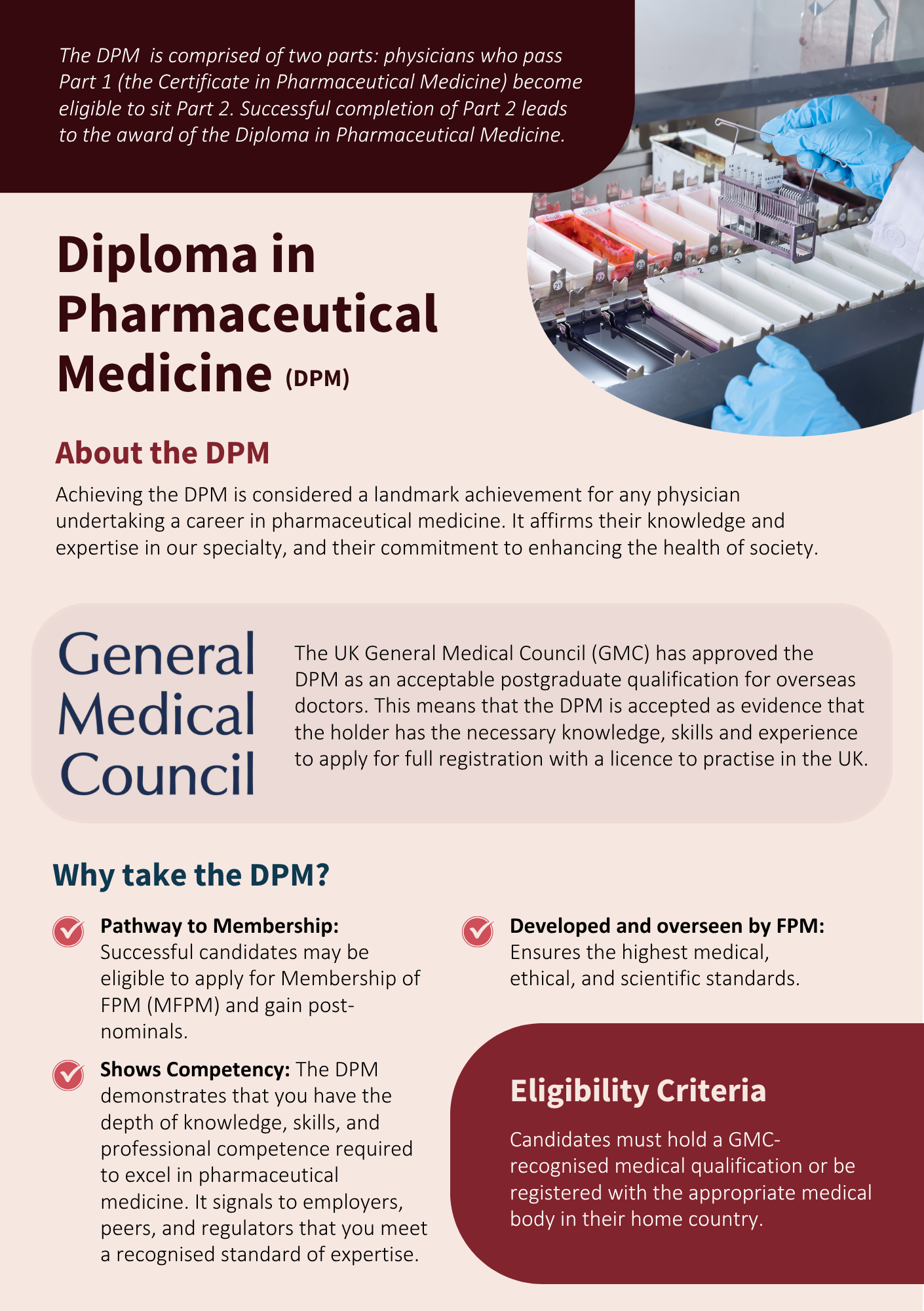
Achieving the Diploma in Pharmaceutical Medicine (DPM) is considered a landmark achievement for any physician undertaking a career in pharmaceutical medicine. It affirms their knowledge and expertise in our specialty, and their commitment to enhancing the health of society.
In this blog, learn why Soha decided to enrol onto the DPM Training Programme, why she would recommend the DPM to other pharmaceutical physicians, and how it has helped her in her current role as a Clinical Development Physician.
Congratulations on passing the DPM! To start off, could you tell us a bit about your background and current role?
Thank you – even though it was only last year, it feels like a lifetime ago! I am currently working as a Clinical Development Physician for a biotechnology pharmaceutical company, providing medical oversight for allergy immunotherapy vaccines. This includes medical monitoring and safety review activities for Phase I-III allergy immunotherapy clinical trials, contributing to end-to-end clinical development strategy for assigned clinical programs, collaborating with the cross functional team to prepare key regulatory documents, such as protocols, IBs, briefing documents and DSURs/PBRERs, and delivering scientific presentations and engaging with relevant key opinion leaders at conferences.

What motivated you to pursue the DPM?
Coming from quite a rigorous medical training background, I initially found myself a bit lost in how to progress in my career, without a clear training pathway. When I discovered the DPM, it ticked all the boxes for me, providing an opportunity to test and solidify all the knowledge and experience I had gained within the pharmaceutical industry over the last 4 years. It also provided the unique opportunity to gain a deeper understanding of all aspects of drug development e.g. country-specific regulation differences and marketing authorisation pathways, pre-clinical drug development and clinical trial statistical principles.
Why did you decide to enrol onto the DPM Training Programme?
Pharmaceutical Medicine is a vast area, covering a wide range of topics- you can easily get lost and overwhelmed when starting to prepare for the DPM. Whilst there are resources available to revise for the DPM, I thought the DPM Training Programme provided a great framework for how to structure revision and to understand what depth of knowledge was required for each section.
Looking back, what difference did the DPM Training Programme make to your chances of success?
I think the Training Programme greatly increased my chances of success. Not only did it encourage me to start revision early on in the year with the biweekly live sessions, but the learning hub was also a great bank for slide decks, links for relevant resources and end of section tests. It also provided a forum for all the candidates to discuss topics, ask questions and seek clarity on some example questions provided. The fact that you have access to the learning hub for 2 years was a particular win for me, as I sat the first paper (CAP) one year, and sat the second part (SAQ and CAP) the next year, so having all the resources to refer back to was such a bonus.
Did the ability to watch live session recordings and work through material on demand via the FPM Learning Hub help you fit preparation around work and personal commitments, and take greater control of your revision?
Absolutely. I attended the live sessions but then rewatched them on the learning hub to revise and pick up on points I may have missed at the time. It allowed me to revisit topics and discussions in my own time. Another amazing resource they provide is all the previous years’ SAQ questions, per module. I was able to work through these questions, ascertain any common ‘hot topics’ that kept coming up year after year and get some real exam practice!
Has the knowledge or confidence you gained influenced your day-to-day work?
Oh 100%. I have so much confidence now in my knowledge of other cross-functional team activities and am able to follow discussions regarding topics that aren’t particularly within my team’s remit. I can meaningfully contribute to strategic and leader discussions, utilising the knowledge I gained from the DPM and turning them into recommendations. I will also say that I started my role as Clinical Development Physician shortly after sitting the DPM, and in the interview process the fact that I was sitting the DPM was a definite positive that worked in my favour to landing the job!
What advice would you give someone considering the DPM?
If you are a pharmaceutical physician working in the industry, I would highly recommend sitting the DPM. Give yourself at least 2 years working in the industry before sitting this exam, as the content is quite complex and in-depth. But it is well worth the hours spent revising for it! I would also recommend not to underestimate the volume of content you need to review and learn. Start revision nearly and have a structure in place. And lastly, PRACTICE! Practice MCQs, SAQs and CAPs. You may feel confident in the knowledge you have retained but putting them into exam question answers is another skill entirely. Do not fall at the last hurdle! Best of luck!
Why take the DPM?
- The only GMC-recognised qualification, aligned with international PharmaTrain standards: The GMC has approved the DPM as an acceptable postgraduate qualification for overseas doctors. It can be accepted as evidence that the holder has the necessary knowledge, skills and experience to apply for full registration with a licence to practise in the UK.
- Pathway to Membership: Successful candidates may be eligible to apply for Membership of FPM (MFPM). Becoming an FPM Member is a significant professional achievement and entitles individuals to use the prestigious post-nominals MFPM.
- Increases your employability: The DPM demonstrates that you have the depth of knowledge, skills, and professional competence required to excel in pharmaceutical medicine. It signals to employers, peers, and regulators that you meet a recognised standard of expertise.
- Developed and overseen by FPM: Ensures the highest medical, ethical, and scientific standards
- Demonstrates that you are an expert: on the theory and practical applications of pharmaceutical medicine