My DPM Experience: How I prepared and grew professionally
Posted on: Thursday 6 August 2026
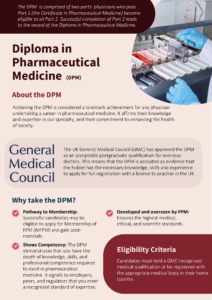
Achieving the Diploma in Pharmaceutical Medicine (DPM) is considered a landmark achievement for any physician undertaking a career in pharmaceutical medicine. It affirms their knowledge and expertise in our specialty, and their commitment to enhancing the health of society.
In this blog, find out how James prepared for the DPM, balanced his studies with a demanding role, and how the experience has supported his professional growth.
Congratulations on passing the DPM! To start off, could you tell us a bit about your background and current role?
I trained and worked as a physician before moving into the pharmaceutical industry. I am now the Medical Lead for Oncology at Novartis, where I lead the medical strategy, evidence generation, scientific engagement and medical education initiatives across breast cancer. My clinical background gave me a strong appreciation of patient care and evidence-based decision making, which continues to shape my approach to improving outcomes for patients through advances in treatment.
What motivated you to pursue the DPM?
The DPM felt like a great opportunity to support my professional development. I wanted to gain a deeper understanding of drug discovery, development and operational aspects of pharmaceutical medicine, beyond what I encountered in day-to-day work. It’s a highly respected qualification that provides a broad understanding of the scientific, regulatory, and ethical aspects of pharmaceutical medicine and I saw it as a great opportunity to strengthen both my knowledge and credibility as a medical affairs professional.
Why did you decide to enrol onto the DPM Training Programme?
I knew the DPM would be challenging alongside my day-to-day responsibilities, so I wanted a structured programme to provide direction and keep my preparation focused. The DPM Training Programme offered Faculty expertise, a clear curriculum and regular opportunities to consolidate learning. It also helped break down a large syllabus into manageable sections which made it easier to balance exam preparation with my day-to-day responsibilities.
Looking back, what difference did the DPM Training Programme make to your chances of success?
The programme provided structure and guidance on what to focus on in a very broad syllabus. It also helped translate complex topics into practical learning points while the mock questions and revision support helped me develop a more effective approach to exam technique. I think it significantly improved both my preparation and my likelihood of passing.
Did the ability to watch live session recordings and work through material on demand via the FPM Learning Hub help you fit preparation around work and personal commitments, and take greater control of your revision?
Definitely, balancing revision with a demanding job can be difficult, so having access to recordings and on-demand content was invaluable. It meant I could study at times that suited me and focus my revision where I needed it most. The flexibility of the Learning Hub allowed me to maintain momentum even during particularly busy periods at work.
Has the knowledge or confidence you gained influenced your day-to-day work?
The DPM has given me a broader understanding of pharmaceutical medicine and greater confidence when discussing topics that extend beyond my immediate role. I feel more comfortable engaging in cross-functional discussions, interpreting regulatory and clinical issues and understanding how different parts of the industry work together. It has helped me think more strategically and appreciate how different aspects of pharmaceutical medicine come together to inform decision-making.
What advice would you give someone considering the DPM?
I would definitely recommend the DPM. It’s a challenging but incredibly valuable qualification. My advice would be to start preparing early, focus on the most important areas of the syllabus, and make the most of the support and resources available through the Training Programme. I also think it is important to view the qualification as more than just passing exams; the knowledge and skills you gain will continue to add value long after completion of the DPM.
Why take the DPM?
- The only GMC-recognised qualification, aligned with international PharmaTrain standards: The GMC has approved the DPM as an acceptable postgraduate qualification for overseas doctors. It can be accepted as evidence that the holder has the necessary knowledge, skills and experience to apply for full registration with a licence to practise in the UK.
- Pathway to Membership: Successful candidates may be eligible to apply for Membership of FPM (MFPM). Becoming an FPM Member is a significant professional achievement and entitles individuals to use the prestigious post-nominals MFPM.
- Increases your employability: The DPM demonstrates that you have the depth of knowledge, skills, and professional competence required to excel in pharmaceutical medicine. It signals to employers, peers, and regulators that you meet a recognised standard of expertise.
- Developed and overseen by FPM: Ensures the highest medical, ethical, and scientific standards
- Demonstrates that you are an expert: on the theory and practical applications of pharmaceutical medicine