Why Visual Representation Matters This Rare Disease Day
Posted on: Friday 27 February 2026
Each year on the last day of February, the global community marks Rare Disease Day, an occasion dedicated to increasing visibility, understanding, and support for the millions of people worldwide living with rare conditions. The theme for Rare Disease Day 2026, Equity for Rare, reminds us that fair care does not mean treating everyone the same, but responding to individual needs, experiences, and circumstances. For individuals and families whose lived experience often sits outside the clinical and statistical majority, this day serves as an important reminder that meaningful advocacy must extend beyond awareness alone and into how we care, communicate, and connect.
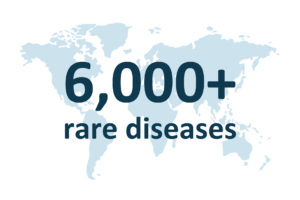
There are approximately 6,000 to 10,000 rare diseases now identified worldwide, collectively affecting an estimated 300–446 million people. Despite this significant global burden, only around 5% of rare diseases currently have an approved treatment, underscoring the scale of unmet need and the importance of continued progress in rare disease research and development.
In this context, scientific advancement alone is not sufficient. In these challenging times, listening to patient experiences – their perspectives, priorities, and challenges – remains essential in shaping the future of rare disease management and ensuring that progress is aligned with what truly matters to those living with rare conditions.
In recent years, an important question has gained increasing attention across healthcare and communications: how are people living with rare diseases represented visually, and why does it matter? In my role as Head of Medical Affairs and Patient Advocacy, Global Rare Diseases, at Chiesi UK, I have seen conversations around patient partnership and inclusivity continue to evolve. Within this context, visual representation has emerged as a critical, yet often overlooked, component of how rare diseases are understood and portrayed.
Representation Is More Than Visibility, It Is Dignity
Historically, imagery used in patient materials, educational resources, and wider media has relied heavily on generic stock photography or simplified visuals that lack authentic connection to the individuals they aim to represent. While often well intentioned, such approaches can create stereotypes, as well as contribute to feelings of invisibility or misrepresentation. This creates a non-virtuous circle and undermines trust between healthcare systems and the people they serve.
There is growing recognition that authentic visual representation is not merely an aesthetic consideration, but that non-authentic images add to social injustice and are a matter of dignity, respect, and equity. The images used in healthcare shape how people see themselves, and how others perceive their condition, their identity, and their place within society.
The images used in healthcare shape how people see themselves, and how others perceive their condition, their identity, and their place within society.
Why Authentic Imagery Matters in Healthcare
Visuals are powerful. They do not simply reflect reality: they actively shape it. Authentic imagery that resonates with lived experience can foster emotional engagement, support constructive dialogue, and enhance the relevance and accessibility of educational materials. In contrast, visuals that fail to reflect the diversity and complexity of rare diseases risk oversimplification, misunderstanding, and disengagement, with potential downstream consequences for awareness, diagnosis, and care.
Authentic imagery also has a meaningful role to play in medicines development. Authentic images help potential participants to engage with research making it more meaningful and accurate. It also supports appropriate participant engagement. Inaccurate images can lead to important safety signals being overlooked or misinterpreted during research participation.
For people living with rare conditions, being able to recognise themselves, truthfully and respectfully, in healthcare communications can be a powerful affirmation of visibility and belonging. It is also important to the community at large, allowing for greater acceptance of those with rare conditions.
Inaccurate images can lead to important safety signals being overlooked or misinterpreted during research participation.
Moving from Awareness to Action
As clinicians, scientists, educators, researchers, policymakers, and communicators, our responsibility to the rare disease community extends not only to what we communicate, but how we communicate. This requires moving beyond tokenistic or symbolic representation towards approaches grounded in partnership, consent, and co-creation.
Practical steps that support this shift include:
- Working collaboratively with patients and advocacy groups to co-develop visual materials that reflect real experiences
- Ensuring clear, meaningful, and ongoing consent processes when capturing and using patient imagery
- Prioritising authenticity in educational, research, and awareness activities, while respecting individual autonomy and contextual nuance
our responsibility to the rare disease community extends not only to what we communicate, but how we communicate.
A Shared Responsibility Across Healthcare
It is only through open and transparent dialogue between industry, researchers, academics, regulators, and patients that the patient perspective can become an integral part of how medicines are developed and delivered to patients.
FPM’s Rare Disease Expert Group aims to provide a platform to foster open dialogue, education, and collaboration with all relevant stakeholders in the rare diseases community.
This Rare Disease Day, with its focus on Equity for Rare, there is an opportunity to reflect on what fair care truly means in practice. Equity requires recognising difference, responding to individual needs, and ensuring that people living with rare diseases are seen, heard, and represented authentically. By listening more closely and engaging more deliberately, we can move beyond abstract notions of care and ensure that people living with rare diseases are genuine partners in shaping understanding, progress, and outcomes that matter to them.