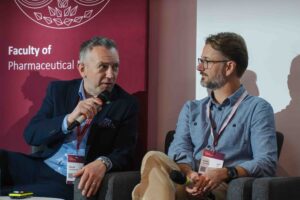
Reflections from the FPM Annual Symposium 2025 with our Session Chairs
Posted on: Thursday 4 December 2025
This year’s FPM Annual Symposium, held on Tuesday 18 November 2025, was a vibrant event, bringing together industry leaders and delegates from around the world.
The programme featured a full day of thought-provoking keynote presentations, panel discussions, and Deep Dives that explored the evolving landscape of pharmaceutical medicine, advances in regulation, and the future of patient-centred innovation.
We caught up with our Session Chairs: Dr Stuart Dollow FFPM, Dr Bu Siakpere FFPM, Dr Felix Jackson FFPM and Dr David Montgomery FFPM who helped shape the programme and led the sessions at the event.
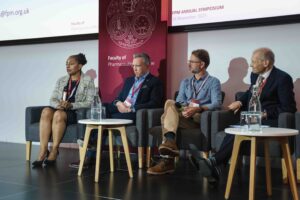
Dr Stuart Dollow FFPM
Event Chair, and Chair of the first Keynote: Generating Momentum in Innovation on Shifting Sands, and closing Keynote: Pharmaceutical Medicine for Health Security
"Many people told me how inspiring and strategically knowledgeable the speakers were, with one person commenting that it was like being at a series of highly impactful thought provoking TED talks. I was really heartened by this feedback."
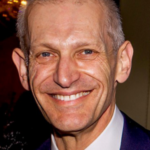
I was privileged to work with the four plenary speakers for both the morning and afternoon sessions. All the speakers were highly impactful and insightful leaders. The discussions we had held in advance of the symposium really helped shape the sessions to understand the unique contribution each speaker would bring.
The morning session was full of provocative insight and opinions, as we heard initially from Annalisa Jenkins on her views of the importance of innovation especially in the field of life sciences, particularly as a driver of economic success. She emphasised that we should not just think about traditional pharmaceuticals but also remember how they interact with diagnostics, software and AI as key enablers. Her wide and diverse career meant she could integrate diverse insights across many sectors to challenge us to all consider how these interacted, and to think differently on the drivers of health both locally and globally.
Freda-Lewis Hall also shared many insights from her experience in her clinical work and in industry. One of the most hard hitting points was how she had read all the research papers to enable her to talk to one of her patients about her condition and quote the probabilities. She described how her patient had listened carefully to percentage risks and chances, but at the end her patient thanked her and said ‘if it happens to me it’s 100%’. She explained how this had really hit home in how for patients it’s personal. She also shared her views that our clinical work had to be more than just tokenism in representing all patients, not just those we could access or enrol in trials. This required us to consider studies that could access and analyse under represented patients in our traditional trial countries, as well as in less well developed countries. We discussed how the COVID RECOVERY study was both poorly controlled in comparison to a traditional pharmaceutical study, but the best representational study in that it could overcome any design limitations by its scale, relevance and analysis.
Amit Aggarwal raised the issue of access and pricing and how the difficulties in pricing and reimbursement had been more recently driven by the impact of tariffs in US rather than the environment in the UK itself. This led to a panel discussion on how heath was a major factor in inequality in both its cause and effect, with deprivation being a major cause of ill health, as well as a limitation on accessing health interventions. Most importantly there was a strong emphasis how improving health was itself a driver of strong economies by improving equality and must be seen as a priority to address rather than relying on it being an output of economic policy.
These themes were picked up in the afternoon plenary with Susan Hopkins, who reflected on her pandemic experience and how UKHSA had worked with many unknown as date and information on COVID was being established, making the best decisions possible at the time with limited information. There were major steps forwards in rapidly using the trials being conducted to determine which interventions worked and which did not and in which patient groups. It also showed how underlying social deprivation and being in an underserved community put people at much higher risk and was an issue that we could not ignore. Based on her experience, Susan explored the ways pharmaceutical physicians and industry could work together to further develop vaccines and diagnostics with new technology, including organ on a chip and rapid diagnostics at scale. This was counterpointed with the market failure we are seeing for antibiotics and the scarcity of new therapeutics, but some hope with the new subscription model for payment for new antimicrobials. Making them available for readiness but limited or very reserved in use was how to help innovate in this area while trying to counter the substantial challenge of Anti Microbial Resistance.
There was real interest and engagement in these plenary sessions which was felt in the discussions in the breaks. Many people told me how inspiring and strategically knowledgeable the speakers were, with one person commenting that it was like being at a series of highly impactful thought provoking TED talks. I was really heartened by this feedback. This and the richness of conversations in the Deep Dives I was able to join and while chatting in the breaks really enhanced my sense of the meeting being worthwhile on so many levels.
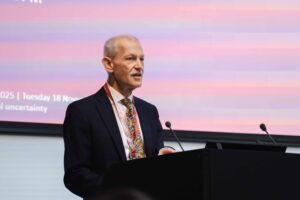
Dr Bu Siakpere FFPM
Chair of Deep Dive 1: Pharmaceutical Medicine’s Future Role in the Health of Women and Deep Dive 4: Research and Development for Our Ageing Population
"Overall, there was a strong sense of collaboration across the FPM organising committee and with the speakers, aligned around a common purpose: to provide stimulating sessions to enhance the practice of pharmaceutical medicine to positively impact patients and society."

To reflect on both Deep Dives, I would say that both Deep Dive 1 – Pharmaceutical Medicine’s Future Role in the Health of Women and Deep Dive 4 – Research and Development for Our Ageing Population went fantastically well. Excellent speakers providing diverse perspectives delivered exceptional presentations which illuminated the root causes and current state of research, development and use of medicines, vaccines and medical devices in the UK and globally.
In considering the themes across the day, there were similarities and differences between both sessions but in both populations the current state of play is an under-representation of women and older people in clinical trials and an incomplete evidence base for use of medicines, vaccines and medical devices – a situation that requires action to address as a priority.
It was particularly striking that both audiences were highly engaged and provided thought-provoking questions, comments and examples which have provided ideas for the basis of further FPM-led initiatives in this arena. Some commitments were made before leaving the room at the end of the session, and at the time of writing this piece, a week after the symposium, work is already underway focussed on these two populations. Trust is the key underlying requirement to progress any initiatives.
In Deep Dive 1, the bigger picture of the women’s health gap globally was presented by Professor Hilary Thomas, the history and current frameworks of the regulatory landscape including FDA, EMEA and other regions was highlighted by Dr Lisa Campbell, the patient, family, and wider societal impact perspective was delivered by Ngawai Moss, and Professor Jennifer Logue provided insights into the practice of metabolic medicine, development and use of Glucagon-like peptide-1 receptor agonists (GLP-1s or GLP-1RAs).
The Deep Dive 4 session started with Rob Walton highlighting the global demographic changes shaping societies and the health care landscape. We heard what is needed to holistically assess the needs of our ageing society across multiple sectors which intersect as we age and would enable an ageing population to thrive. Dr Emma Harvey presented on current practice and adapting pharmaceutical medicine to meet the needs of an ageing population. Dr Ana Milinkovic from ViiV Healthcare highlighted shifts in the HIV arena and new approaches to people ageing with HIV. Dr Graham Campbell provided insights into the MRC strategy for research into ageing and potential for collaboration with the pharmaceutical medicine community. Jeremy Taylor covered research frameworks for inclusion of older people focussing on the UK NIHR experience and recent multi-stakeholder research statement of intent.
A key shared message across both sessions was that across all disease areas including where the older person represents a high proportion of medicines users there is a current state of under-representation of older people in clinical trials and incomplete evidence base for use of medicines in older people.
We also recognised that drivers for change have appeared in how older people are perceived and their needs addressed from across multiple areas of society.
Looking ahead, the discussions highlighted the potential for changing the current position action for our ageing population by leveraging cross-organisational collaborations such as with the MRC, NIHR and others who have specific strategies to address research gaps and opportunities in the ageing population.
Another important theme was the focus on learnings from HIV – this relatively new disease area has adapted the focus of research, development, use of medicines and monitoring as the user population demographic ages and additional considerations of ageing, co-morbidities and concomitant medications are required.
Overall, there was a strong sense of collaboration across the FPM organising committee and with the speakers, aligned around a common purpose: to provide stimulating sessions that enhance the practice of pharmaceutical medicine and positively impact patients and society.
And to close on a personal note, aside from my own sessions, my favourite part of the day was the brilliant, inspiring keynote presentations!

Dr Felix Jackson FFPM
Chair of Deep Dive 3: New Technologies in Pharmaceutical Medicine
"The most rewarding part of helping to organise the session was meeting with many people who are developing new technologies in life sciences."
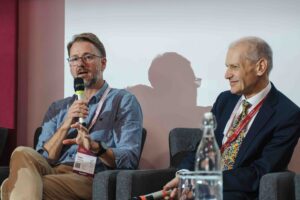
Reflecting on Deep Dive 3, I felt that the sessions seemed to be very well received as the people in the room enjoyed learning about the new technologies beyond pharmaceuticals, and the regulatory framework that applies to devices, including software like AI that is used for a medical purpose.
During the discussions, key topics or issues that were discussed consisted of: Pulsed-flow oxygen delivery, the use of LLMs in scientific communication and clinical-decision support, the regulation of software as a medical device, the use of ambient voice technologies in clinical care.
What became clear was that the main insights and take-home messages were that new technologies in life sciences used for a medical purpose are regulated as medical devices, but this is often overlooked by technology entrepreneurs. FPM could take a leading role in providing physicians and other health professionals with events, education and training to support the development of safe and effective new technologies in life sciences.
For me personally, the most rewarding part of helping to organise the session was meeting with many people who are developing new technologies in life sciences.
Dr David Montgomery FFPM
Chair of Deep Dive 2: Communicating on the Front Line: Understanding and Transparency in Health Care and Medicines
"The keynote speeches from Freda Lewis-Hall, Annalisa Jenkins and Prof Susan Hopkins, were exceptional."
I was delighted to chair a panel discussion on communicating on the front line, exploring the challenges of communicating science to the public in the face of increasing misinformation, falling trust in established experts and a complex regulatory framework governing industry communication with the public.
Misinformation has been talked about extensively in recent weeks and months. The harms that can arise from it are well documented, from vaccine hesitancy to unproven treatments. And yet the discussion on the day centred much more around the changing nature of communication and the challenge for industry to communicate with the public in the face of a regulatory framework that hasn’t changed in decades.
There was general agreement that industry is, as a consequence, far too removed from the discussions in public, but that more engagement, openness and transparency could do much to improve perceptions and correct misconceptions in the scientific debate, especially online. There was one surprising discussion, that despite all we hear about social media in reality established media outlets still drive the news agenda. And one real game changing insight; that creating patient specific content could actually drive suspicion, especially if patients and the public are excluded from the company to clinician communications.
While of course our session was incredibly valuable, it sat neatly within an excellent programme and the keynote speeches from Freda Lewis-Hall, Annalisa Jenkins and Prof Susan Hopkins, were exceptional. Freda and Annalisa, in particular, gave TED style talks on the changing geopolitical structure and the challenges that will pose to the life sciences sector. Overall it was an incredible meeting.