From pharmacist to CPM holder: Evangeline’s journey
Posted on: Monday 16 November 2026
Author: Evangeline Nana-Dabankah
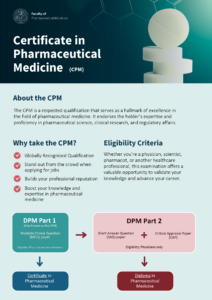
The Certificate in Pharmaceutical Medicine (CPM) is a respected qualification, open to non-physicians, offering professionals from a range of backgrounds the opportunity to develop their knowledge and expertise in pharmaceutical medicine.
Pharmacist and CPM holder Evangeline Nana-Dabankah shares her journey to achieving the qualification, the challenges she overcame and her advice for other non-physicians considering the CPM.
To start off, could you tell us a bit about your background and current role?
I’m currently a Signatory Medical Advisor. Before that, I was a hospital pharmacist, then moved into industry as a Scientific Advisor and worked my way up to my current role.

What inspired you to take the CPM?
A colleague who is a medic brought it up. It was something she had wanted to do, and when she discovered the CPM had opened up to non-physicians, she shared it with the rest of the Medical Affairs team. We’re all the type to strive for upskilling and improvement, so I jumped at the opportunity.
As a non-physician, did you have any doubts about taking the CPM? And if so, what helped you overcome them?
The qualification has traditionally been associated with physicians, so I felt some imposter syndrome and anxiety about representing my fellow pharmacists well. What helped was changing my perspective. I stopped focusing on passing the exam and started seeing the course as an opportunity to learn, broaden my knowledge and discover things my day-to-day job might not expose me to.
How did you fit studying for the CPM around your work and everyday life?
By being realistic and protective of my time. I set a study plan a year beforehand but found it hard to stick to, so I had to set more realistic expectations for myself. I broke the syllabus into more manageable sections and set weekly goals. Consistency and setting dedicated time for study were key.
How did you find the actual exam went?
I was nervous at first, as you’d expect, but once I settled in, the exam felt fair. Staying calm and reading each question very carefully made a big difference. I just did the best I could.
If someone was starting the CPM todaIf someone was starting the CPM today as a non-physician, what would your top three pieces of advice be?y as a non-physician, what would your top three pieces of advice be?
- Start early and plan your study and revision routine realistically around your schedule. It can seem like a lot of content at first, because it is! When you break it down, however, it feels far more manageable.
- Build your plan around the curriculum. It’s easy to lose focus when studying, and the syllabus keeps you on track.
- Use the expertise of the people you know. Colleagues in clinical development, regulatory, safety and pharmacovigilance can bring topics to life far better than a textbook.
How did you celebrate when you found out you’d passed?
Well, I screamed repeatedly for about ten minutes, then called my family and told them a miracle had just occurred.
Do you think the CPM is valuable for other non-physicians considering a career in pharmaceutical medicine?
Absolutely. The experience is invaluable. Coming into the pharmaceutical industry can be daunting, and there will inevitably be things you don’t know, or don’t even know to ask about. The CPM is a structured way to deepen your understanding of pharmaceutical medicine, particularly in areas you may not otherwise get the chance to be exposed to. It’s recognised across the industry and globally, and it covers everything from discovery through to post-marketing. There’s nothing else quite like it, so why not take advantage?
About the CPM
The CPM is a respected qualification that serves as a hallmark of excellence in the field of pharmaceutical medicine. It endorses the holder’s expertise and proficiency in pharmaceutical science, clinical research, and regulatory affairs.
Why take the CPM?
- Globally Recognised Qualification
- Stand out from the crowd when applying for jobs
- Builds your professional reputation
- Boost your knowledge and expertise in pharmaceutical medicine